





Airlines across the world are facing mounting pressure from volatile jet fuel prices, with the International Air Transport Association warning that many carriers are unable to protect themselves against rising fuel costs through hedging.
The warning was issued by IATA’s Head of Fuel, Daniel Chereau, during the S&P Global Energy Middle East Petroleum and Gas Conference, according to a Reuters report published on Wednesday. The development comes amid a sharp rise in jet fuel refining margins, which have reached record levels and are increasing operating costs for airlines worldwide.
Jet fuel hedging involves the use of financial instruments such as futures, swaps and options to lock in or stabilise fuel prices ahead of time. The strategy helps airlines reduce exposure to sudden increases in fuel costs and improve predictability in their operating expenses.
In Nigeria, however, jet fuel hedging is not practised by either airlines or fuel marketers. As a result, operators remain fully exposed to fluctuations in international fuel prices and foreign exchange volatility.
IATA noted that airlines are being affected differently by movements in jet fuel prices depending on their capacity to hedge fuel exposure.
“Many airlines have been hit hard by price swings in the jet fuel market, and some are not in a position to hedge their exposure, the International Air Transport Association’s head of fuel said on Wednesday,” the report read in part.
Chereau explained that airlines with more sophisticated hedging programmes are better positioned to absorb the effects of fuel price volatility.
He further stated that widening crack spreads have intensified cost pressures across the aviation industry and that the impact of fuel market volatility differs significantly depending on the extent of an airline’s exposure and its ability to hedge.
According to Chereau, jet fuel refinery profit margins, commonly referred to as crack spreads, have climbed to unprecedented levels. He revealed that crack spreads in North West Europe exceeded $121 per barrel in March, compared with approximately $30 per barrel before geopolitical disruptions that emerged in late February.
He also disclosed that signs of demand disruption are beginning to emerge within the aviation sector due to rising fuel costs, flight cancellations and intermittent fuel shortages in certain locations.
In Nigeria, airlines and marketers continue to operate without fuel hedging mechanisms, leaving them vulnerable to market instability.
This position was confirmed by the Managing Director and Chief Executive Officer of Raven Energy, Adeyinka Adewole, during an exclusive interview with Nairametrics.
Adewole explained that airlines in developed economies commonly deploy financial instruments such as futures, swaps and options to manage fuel price risks, but such tools remain largely unavailable within Nigeria’s aviation fuel market.
He noted that Nigerian airlines and marketers do not hedge their exposure to jet fuel prices and therefore remain fully exposed to global market fluctuations and exchange rate movements.
According to him, hedging instruments that are widely used internationally have not been broadly adopted in Nigeria, a situation that continues to worsen instability in aviation fuel costs, particularly during periods of global market shocks.
Nigeria’s aviation industry has faced sustained challenges arising from rising Jet A1 prices, resulting in operational disruptions, regulatory interventions and increased costs of air travel. Domestic and international airfares have also risen in recent months as operators struggle to manage expenses.
The Airline Operators of Nigeria (AON) had previously warned that the escalating cost of Jet A1 was making domestic flight operations increasingly difficult to sustain.
The association stated that fuel prices surged from about N900 per litre in February to more than N3,000 per litre within a matter of weeks, describing the increase as unsustainable.
As a result, AON threatened to suspend flight operations nationwide on April 20, 2026. However, the Federal Government intervened to avert the disruption.
The government subsequently approved a 30 per cent relief package on statutory charges owed by airlines, including fees payable to the Federal Airports Authority of Nigeria (FAAN) and the Nigerian Airspace Management Agency (NAMA).
In addition, the Nigerian Midstream and Downstream Petroleum Regulatory Authority (NMDPRA) introduced temporary indicative Jet A1 pricing ranging between N1,760 and N1,988 per litre in Lagos.
Airlines also adjusted their operations in response to the cost pressures. Rano Air suspended some of its routes, while Air Peace reduced its Abuja-London operations to three flights per week.
Despite concerns over rising prices, jet fuel marketers rejected claims that aviation fuel had sold for as much as N3,000 per litre, insisting that such figures did not reflect actual market transactions.
Recent developments indicate that Nigeria is becoming increasingly significant in global jet fuel supply dynamics.
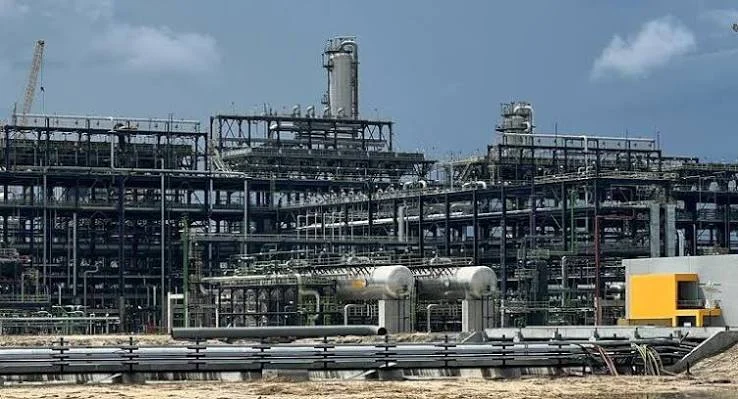
Nairametrics recently reported that Dangote Refinery emerged as the world’s largest exporter of jet fuel in April 2026. The achievement was attributed to increased production levels and disruptions in global fuel trade caused by the closure of the Strait of Hormuz.
The refinery also reduced its ex-depot Jet A1 price from N1,750 per litre to N1,650 per litre.
According to the refinery’s Chief Executive Officer, David Bird, Dangote Refinery plans to expand its refining capacity by an additional 700,000 barrels per day by 2028.
Bird stated that the refinery currently produces surplus volumes of jet fuel and is strategically positioned to serve international markets amid geopolitical disruptions affecting global fuel supply chains.
He further noted that aviation fuel demand across Africa remains relatively low when compared with other regions, creating opportunities for the export of surplus jet fuel production.


