







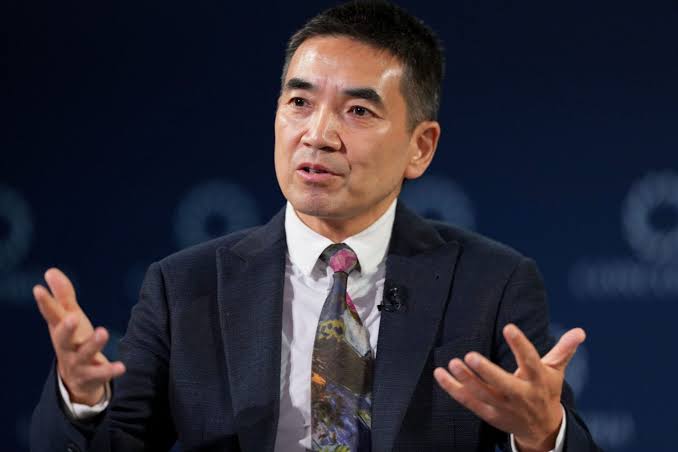
The Chief Executive Officer of Zoom, Eric Yuan, has projected that the traditional five-day workweek could soon become obsolete, as advances in artificial intelligence continue to reshape the global workplace.
Speaking in a recent interview with Wall Street Journal, Yuan suggested that within the next five years, rapid developments in AI technology could significantly reduce the need for human labour across multiple sectors, paving the way for shorter working weeks.
According to him, the future of work will be heavily influenced by automation and digital tools capable of handling tasks that currently require human input. This, he said, could lead to a shift from the conventional five-day structure to a four-day workweek or even less.
“What is the world of work going to have in that world?” Yuan asked during the conversation, reflecting on how AI will redefine productivity and workplace expectations.
He acknowledged uncertainty in his prediction, stating, “I think I might be wrong,” but maintained that the trajectory of technological advancement points towards a reduced reliance on traditional work schedules.
Yuan further explained that AI-driven systems are already enhancing efficiency in communication, data processing and routine business operations. As these technologies become more sophisticated, companies may find that employees can achieve the same level of productivity in fewer working hours.
The Zoom founder also highlighted the potential benefits of such a shift, noting that reduced workdays could improve work-life balance, allowing individuals to spend more time with family and focus on personal well-being.
He added that digital collaboration tools, including those developed by his company, are already enabling more flexible work arrangements, a trend that gained momentum during the COVID-19 pandemic and has persisted in many organisations worldwide.
However, Yuan’s remarks come amid ongoing global debates about the feasibility of shorter workweeks, with some companies experimenting with four-day schedules while others remain cautious about potential impacts on output and profitability.
Labour experts have noted that while AI could indeed reduce workloads, the transition to shorter workweeks would depend on organisational policies, economic conditions and the nature of specific industries.
Despite these uncertainties, Yuan remains optimistic that technological innovation will ultimately redefine how people work, making rigid schedules less relevant in the years ahead.
His comments add to a growing conversation among business leaders and policymakers about the future of employment in an increasingly automated world, where efficiency may no longer be measured by hours spent at work but by outcomes achieved.