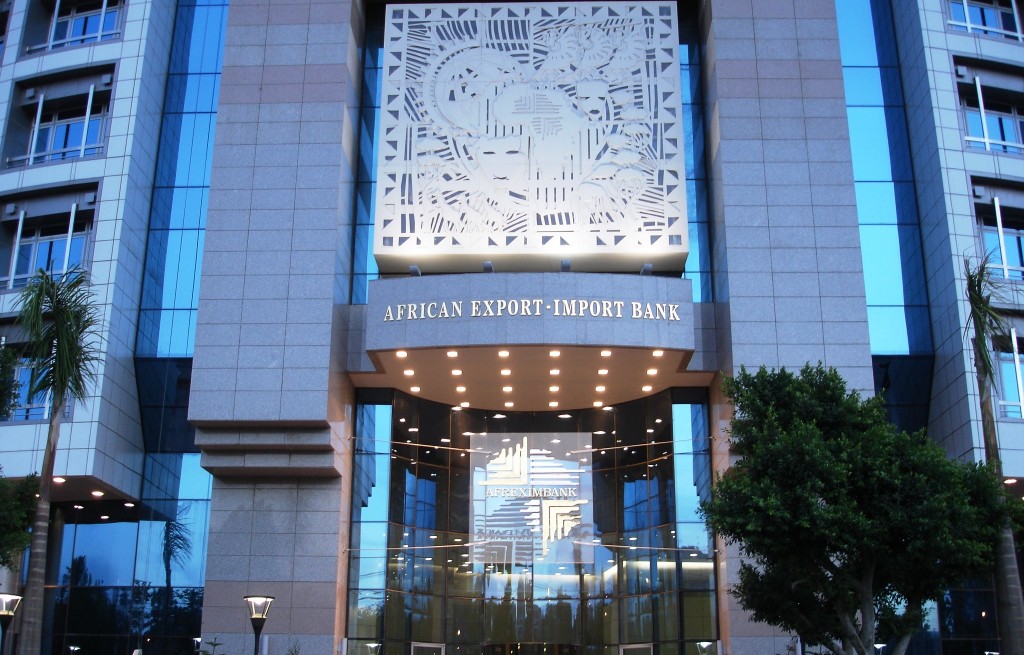
The African Export-Import Bank is aiming to secure at least $1 billion in capital commitments from prospective investors at the ongoing Creative Africa Nexus in Lagos.
The bank wants to deepen investment in Africa’s creative economy.
Afreximbank’s Executive Vice President for Intra-African Trade and Export Development, Kanayo Awani, disclosed this while speaking to journalists on Friday on the sidelines of the CANEX Summit. The summit is taking place at the Wole Soyinka Centre for Culture and Creative Arts, formerly the National Theatre, Lagos.
Awani said she was confident the Lagos edition would surpass the investment deals recorded at the previous event in Algiers, Algeria. In 2024, Afreximbank facilitated about $540 million in trade and investment transactions there.
She noted that the bank had already signed two cooperative agreements worth about $100 million on Thursday. She expects more commitments before the four-day event ends on Sunday.
“In Algiers in 2024, we got deals close to about $540 million. The expectations here are high. It’s expected that deals would be done, and that’s why we have deal rooms. On Thursday, we signed two cooperative agreements of about $100 million,” she said.
Awani added that the scale of Nigeria’s market and the opportunities in its creative industry justified an even higher target.
“This is Lagos, and this is Nigeria. There is no reason why we shouldn’t expect more than $1 billion. The only thing that I can assure you is that Afreximbank is here to support. We are here to promote, we are here to facilitate and we are here to finance Nigeria and Africa’s creative economy,” she said.
CANEX WKND 2026 is an Afreximbank initiative designed to promote investment, trade and commercial opportunities across Africa’s creative and cultural industries.
The four-day event, which began on Thursday, is being organised in partnership with the Federal Government of Nigeria, the African Union Commission (AUC) and the Secretariat of the African Continental Free Trade Area (AfCFTA).
The platform gives African creative businesses and brands opportunities to explore international markets, attract investors and form commercial partnerships.
It also lets artists and content creators commercialise their intellectual property, showcase their work and connect with potential buyers and distributors.
Participants are taking part in exhibitions, creative writing workshops, literary activities and culinary showcases. Exhibitors can also promote African products and services to a wider international audience.
The programme features activities across music, film, fashion, literature, spoken-word poetry, exhibitions, sports and other creative sectors.
Key attractions include the CANEX Summit, a marketplace, book fairs and various business-to-business engagements meant to connect creative entrepreneurs with investors and industry stakeholders.
Through the initiative, Afreximbank aims to strengthen the commercial infrastructure supporting Africa’s creative industries. It also wants to improve access to finance, international markets and distribution networks.
The investment drive comes as Afreximbank reports stronger financial performance. Its net income rose by 24 per cent to $813.5 million for the nine months ended September 30, 2026.
This compares with $654.3 million in the corresponding period of 2025, reflecting growth in interest earnings and lending activities.
Gross income increased by 11 per cent to $2.7 billion from $2.4 billion in the prior-year period. Net interest income rose by 17.45 per cent to $1.49 billion from $1.27 billion.
The improvement in profitability was supported by increased lending, higher interest income and improved cost efficiency.
Management also indicated that the bank’s financial performance had exceeded its expectations for the current financial year.
The stronger earnings provide additional context for Afreximbank’s push to mobilise investment and financing for Africa’s creative economy. The sector continues to attract attention as a potential source of employment, export earnings and economic diversification.