
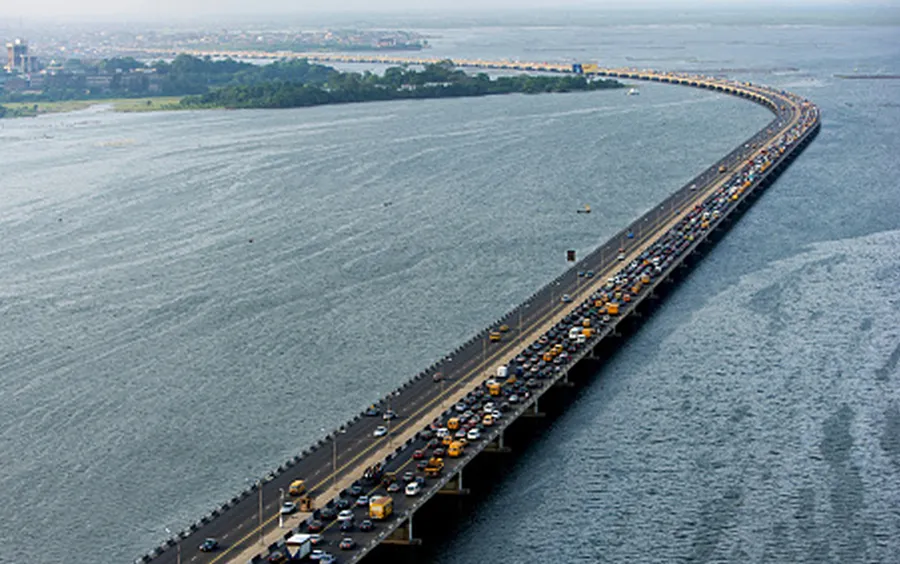
Lagos is sinking faster than scientists previously believed, according to new research on African coastal cities, and the finding is heightening worries about the city’s exposure to flooding and rising seas.
The research, carried out by scientists at Virginia Tech and reported by the BBC, used satellite data to track how land is moving across 20 African coastal cities.
It found that the ground beneath Lagos is sinking by an average of 5mm every year, which could increase the number of people and properties exposed to coastal flooding.
The scientists relied on radar imagery from the European Space Agency’s Sentinel-1 satellites to study changes in land elevation across the 20 cities.
Lagos was found to be sinking at an average of 5mm per year, while Alexandria in Egypt is subsiding by about 6mm annually. Both rates are higher than those estimated in 2021 by the Intergovernmental Panel on Climate Change (IPCC).
The BBC report stated: “Scientists used radar imagery from the European Space Agency’s Sentinel-1 satellites to map how much the land beneath 20 African coastal cities had moved.
“The study found that some cities – including Lagos in Nigeria and Alexandria in Egypt – were sinking much faster than previously estimated in 2021 by the UN’s climate body, the Intergovernmental Panel on Climate Change (IPCC).”
It added, “The ground under Alexandria and Lagos was found to have sunk an average of 6mm and 5mm per year respectively.”
Lead author Oluwaseyi Dasho said land subsidence could significantly raise flood exposure over several decades, even though its effects are often hard to notice in daily life.
The study estimated that about 4 million people in Lagos could be exposed to extreme sea levels by the end of the century.
Across all the cities examined, 7 million people, one million buildings and assets worth $180 billion could face flood risks by 2050.
Land subsidence occurs when the ground gradually sinks, lowering an area’s elevation relative to the sea.
The study also recorded significant subsidence in Luanda, Angola, while Durban, South Africa, remained relatively stable or saw slight increases in land elevation.
The researchers identified excessive groundwater extraction, land reclamation and construction on loose ground as possible contributors to the sinking of Lagos.
Reclaiming land from the ocean to build artificial islands, and putting up buildings on loose ground, were highlighted as possible factors behind the city’s subsidence.
Excessive groundwater extraction can also cause underground soil layers to compact, gradually lowering the land surface.
Senior author Manoochehr Shirzaei, a professor of geosciences, said many human-related causes of subsidence are localised and can be tackled through targeted policies.
He said cutting down excessive groundwater extraction and providing alternative water sources could help limit some of the activities responsible.
The researchers recommended adaptation measures such as flood defences and, where necessary, relocating critical infrastructure to higher ground.
The Sentinel-1 satellites revisit the same areas every six to 12 days, which allows researchers to detect land movements as small as 1mm annually.
Shirzaei said better monitoring could help governments spot areas where earlier climate assessments underestimated subsidence risks, and allocate resources more effectively.
The findings, published in Science Advances, could also help close monitoring gaps in other vulnerable regions, including Pacific island nations.
An earlier report on worsening water quality in Lekki also flagged the risk of land subsidence, with independent researcher Tonami Playman warning that heavy reliance on private boreholes could contribute to gradual land sinking.
Playman explained that uncontrolled groundwater extraction can cause underground soil layers to compact, particularly in areas with soft, marshy terrain such as Lekki, potentially damaging buildings and infrastructure.
He cited Venice, Tokyo and Shanghai as examples of cities where excessive groundwater extraction has contributed to land subsidence.
He noted that some cities had responded by restricting borehole drilling and developing alternative water sources.
The earlier report also pointed to Lagos’ inadequate piped water infrastructure, which has left many households and businesses dependent on private boreholes.
Playman argued that improving the city’s water supply would require investment in modern distribution pipelines and comprehensive wastewater infrastructure, rather than simply expanding water production capacity.
These concerns are in line with the latest study’s findings, which name groundwater extraction, land reclamation and construction on loose ground as possible contributors to subsidence in Lagos.