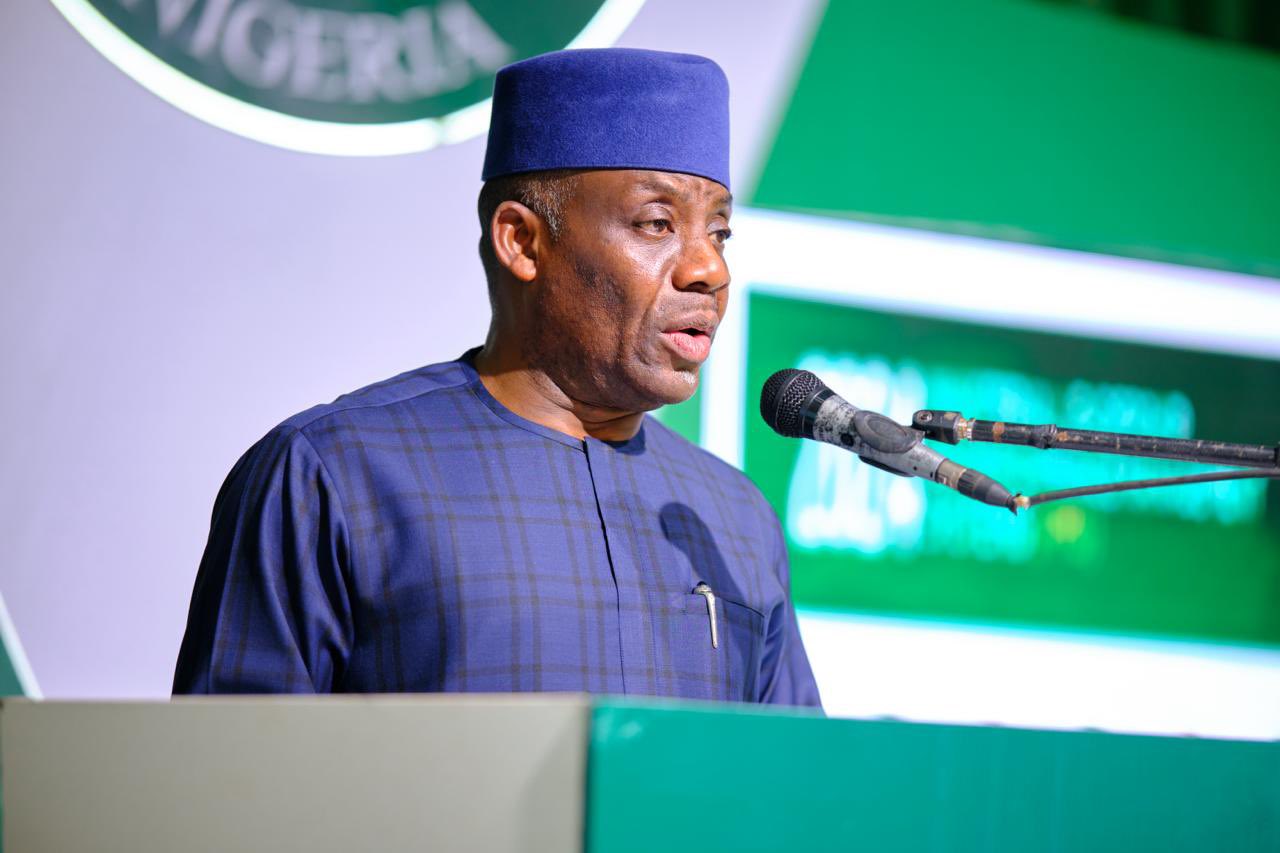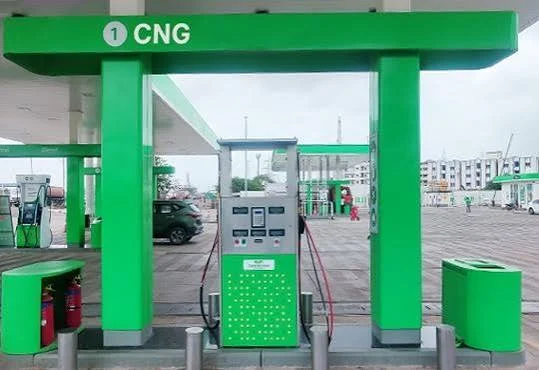
The Executive Director, Midstream and Downstream Gas Infrastructure Fund, Okuwale Adama, has said the three Compressed Natural Gas stations inaugurated in Kano State can refuel up to 2,500 cars and tricycles daily.
Adama disclosed this on Thursday during the inauguration of the facilities in Kano.
The facilities comprise a 300,000 standard cubic metres per day Liquefied Compressed Natural Gas (LCNG) distribution hub and retail station at Tamburawa in Dawakin Kudu Local Government Area, and a 21,000 standard cubic metres per day LCNG retail station at Hotoro in Tarauni Local Government Area.
“The facilities can refuel up to 2,500 cars and tricycles every day. That is nearly two vehicles every single minute, day and night. For the taxi driver who starts work before dawn, that means less time in the queue and more time on the road earning a living,” Adama said.
He said the inauguration of the stations would enable car and tricycle owners to save significantly on fuel costs.
“The savings are just as real. Here in Kano, a litre of petrol sells for about ₦1,420, while the same amount of energy from CNG costs about ₦600. That is less than half the price. Take a keke rider who buys ten litres of petrol a day. Today he spends ₦14,200. On CNG, the same day’s work costs him about ₦6,000. That is ₦8,200 back in his pocket every day,” he said.
According to Adama, the Tamburawa station alone can handle 300,000 standard cubic metres of gas daily.
“In energy terms, that is about what ten fully loaded petrol tankers carry, available right here in Kano every single day,” he added.
He commended President Bola Tinubu for placing renewed emphasis on domestic gas utilisation and cleaner transport alternatives through the Renewed Hope Agenda.
Also speaking, the Founder of Rolling Energy Limited, Mubarak Danbatta, described the inauguration of the three CNG stations as another step towards transforming the energy landscape of Northern Nigeria.
“When we established Rolling Energy, our vision was simple: to bring cleaner, more affordable and accessible energy closer to Nigerians, particularly in Northern Nigeria, where gas infrastructure is inadequate,” he said.
Danbatta explained that the Tamburawa LCNG Mother Station has a designed gas-handling capacity of five million standard cubic feet per day. It is supported by two LNG tanks of 55 metric tonnes each, giving it a combined storage capacity of 110 metric tonnes.
He added that the Hotoro Quarters Daughter Station has a storage capacity of eight metric tonnes, designed to suit its strategic location and available space.
“Through our partnership with MDGIF, we are helping bridge that gap. We are not simply building gas stations. We are building an integrated energy ecosystem that will power industries and many other businesses,” he said.