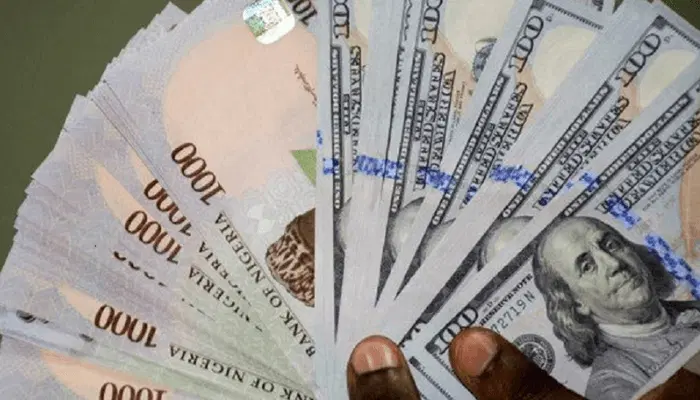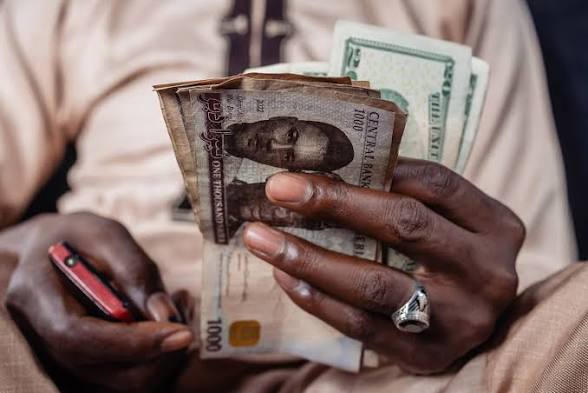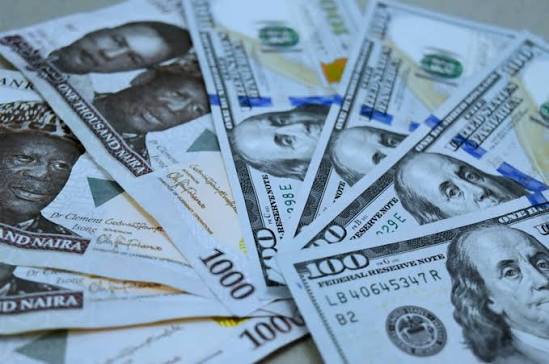

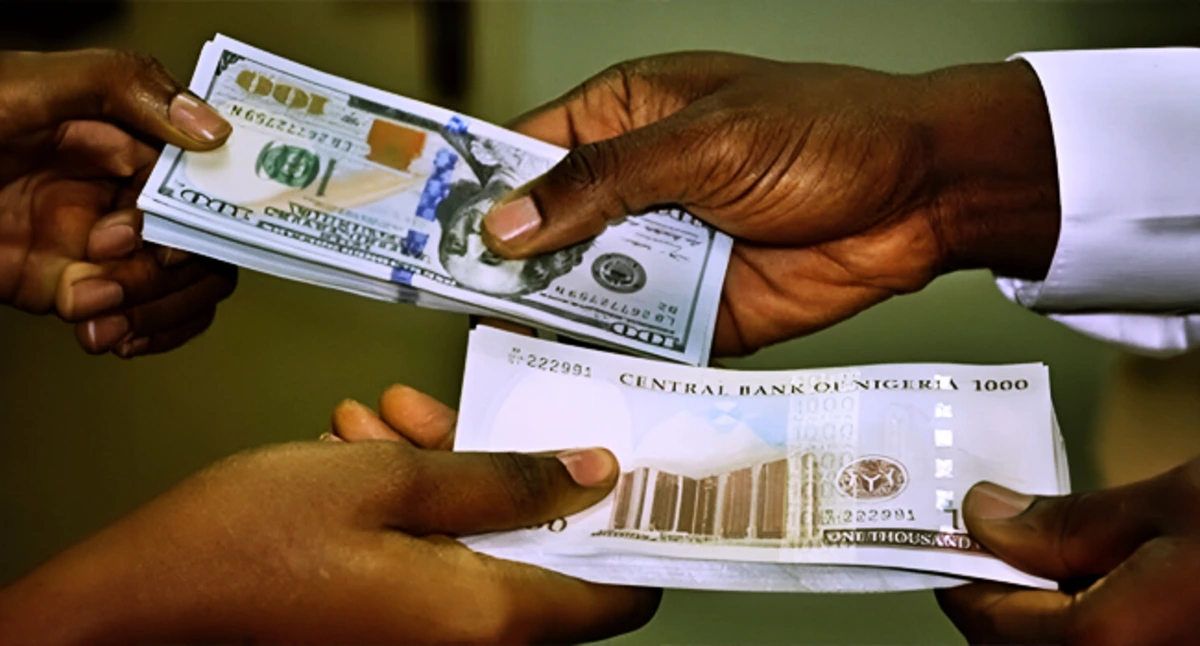
The naira closed at ₦1,350.45 per dollar on November 5, 2026, weakening by ₦4.44 from its November 2 close, just as a study in the Central Bank of Nigeria’s own journal identified budget deficits as a primary driver of exchange-rate depreciation.
That was ₦4.44 weaker than the ₦1,346.01 recorded on November 2, according to Central Bank of Nigeria data reported by Nairametrics. Interbank turnover that day was about $82 million, down from about $101 million in the previous session.
A soft week for the naira is not unusual. What stands out is that the CBN’s own journal has just set out a mechanism that matches the market’s movement.
A paper in the CBN Journal of Applied Statistics, titled Budget Deficit Dynamics and Macroeconomic Performance in Nigeria and authored by Ndubuisi E. Uguru, uses annual data from 1981 to 2024. ThisDay summarised its findings on November 6.
According to the study, budget deficits are a primary driver of exchange-rate depreciation. They account for a large share of short-run currency movements and keep pushing the currency weaker over time.
The deficits also exert delayed upward pressure on interest rates. Money supply can shrink when the central bank tightens to contain the fallout from government borrowing.
The study finds no statistically significant direct link between deficits and inflation. In that framework, Nigeria’s inflation follows supply shocks, structural bottlenecks and the pass-through of a weaker naira into local prices.
The fiscal problem therefore shows up first in the exchange rate and the cost of money, and reaches prices later through the currency.
The pattern is known as fiscal dominance, where the government’s financing needs limit how freely the central bank can pursue monetary stability on its own.
Gross external reserves rose by only $295.35 million in October 2026, according to Nairametrics. That was the slowest positive monthly increase so far this year.
Net foreign exchange reserves have reached a record $46 billion, up from $34.80 billion at the end of 2025. The buffer is larger, yet the naira still slipped in the first week of November.
Reserves help, but they do not cancel out a persistent deficit that competes for dollars and domestic credit. When the government borrows heavily at home, private borrowers face higher interest rates.
When the deficit feeds fears of depreciation, importers and portfolio managers bid for dollars. Both channels showed up in the same week, producing a weaker official rate and a harder path to lowering the Monetary Policy Rate.
The MPR stands at 23 per cent after the 350-basis-point cut on September 22. Headline inflation was 14.63 per cent in September. The gap looks like room to ease, but fiscal pressure is why that room can close again.
The first step, the article argues, is to pass a legally binding fiscal rule that caps the budget deficit as a share of GDP. The CBN paper calls for this. A soft target that can be rewritten every budget cycle is not a rule.
The second step is to coordinate fiscal and monetary operations in public. Abrupt liquidity squeezes after large government disbursements are a costly way to learn that the two sides of the state are not talking. A published framework would let the CBN manage liquidity earlier, rather than only after the damage is done.
Finally, a larger reserve stock should not be treated as proof that the exchange rate is settled. Attention should go to the deficit path and the domestic borrowing calendar, which are the variables the CBN study links to depreciation and higher rates.
Nigeria can hold more dollars and still see a softer naira if the deficit keeps setting the pace. The CBN research is the bank’s own journal saying that fiscal imbalances drive the currency, lift rates with a lag and force defensive tightening.
Fix the deficit rule and the naira debate gets smaller.