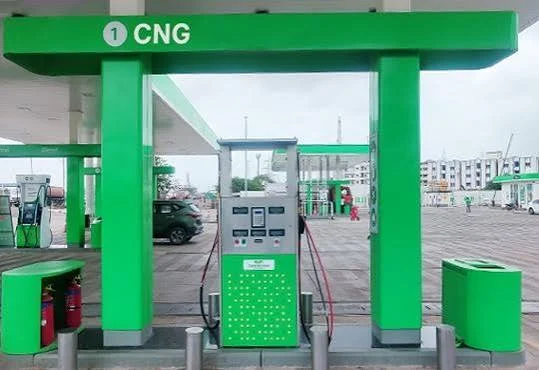
The Federal Government on Friday turned an abandoned petrol filling station at the State House, Abuja, into a Compressed Natural Gas refuelling facility.
It said the move was part of efforts to wean Nigeria’s transport sector off petrol and diesel, amid lingering economic pressures following the removal of the fuel subsidy in 2023.
The Permanent Secretary, State House, Temitope Fashedemi, who inaugurated the facility, said the project was executed at no cost to the State House. It was delivered through a partnership with the Presidential Initiative on Compressed Natural Gas and Electric Vehicles and Rollin Energy Limited, the private operator.
Fashedemi said the government’s decision to make the abandoned station available for conversion was deliberate. It was meant to demonstrate the viability of the CNG transition model and signal to private investors that opportunities existed in the sector.
“All the filling stations you see around, are they owned by government? No. They are owned by people and business operators.
“The earlier existing and prospective business people recognise this as an opportunity and partner with Pi-CNG to establish these facilities, the better,” he said.
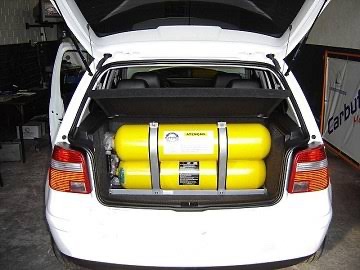
Fashedemi disclosed that the State House had already integrated CNG technology into its vehicle fleet. About 10 recently acquired JAC vehicles operate as hybrid models, alongside shuttle buses serving the Presidential Villa.
He added that interested State House personnel would be invited in the coming weeks to convert their personal vehicles to CNG-hybrid systems, subject to technical eligibility assessments.
“We are demonstrating that we are walking the talk of Mr President,” he said.
The Chief Executive Officer of Rollin Energy, Mubarak Danbatta, said the new facility, located in Karu, Abuja, was an integrated refuelling unit. It can serve about 150 vehicles daily, including motorcycles, depending on cylinder sizes and operating pressure.
Its double-nozzle dispensers allow simultaneous refuelling from both sides of a vehicle.
The company said the State House project was its second Pi-CNG partnership, following an earlier collaboration launched on May 29, 2024.
Danbatta said Rollin Energy currently operated facilities in Ilorin and Abuja. Two more stations in Kano are expected to be commissioned next week, and two others are planned for Kaduna.
He noted that the company was targeting nearly 15 CNG facilities nationwide before the end of 2026.
The Chairman of Pi-CNG, Ismael Ahmed, said Nigeria currently had 106 operational CNG stations, with 170 more at various stages of development or awaiting regulatory approval.
He disclosed that President Tinubu had directed the establishment of 1,500 additional stations in February and another 500 in August. The facilities are expected to come on stream between now and early 2027, bringing the total target to 2,000 new stations nationwide.
Ahmed said the programme had moved beyond the experimental stage and was now focused on scaling up.
He cited measurable effects on transport fares, saying CNG-powered buses had cut costs by between 30 and 40 per cent on routes where they operated, including Abuja, Lagos and the Kano-Katsina corridor.
He noted that commuters on the Kano-Katsina route who previously paid between ₦3,000 and ₦4,000 could now travel for about ₦1,500 on CNG-powered buses.
For his part, the Senior Special Assistant to the President on Domestic Affairs, Toyin Subair, said the Federal Government and state governments were expanding investments in CNG-powered buses, trucks and tricycles. He said the aim was to ensure that lower fuel costs translated into reduced transportation expenses for ordinary Nigerians.
He disclosed that the National Economic Council had committed to a joint financing arrangement with the Federal Government to support the deployment of affordable transportation across states. The target is to reduce fares by 40 per cent or more, particularly on interstate routes and for the transportation of agricultural produce.
Subair also disclosed that more than 30,000 additional vehicle conversion kits were expected to enter the Nigerian market from next week. The move is aimed at expanding conversion capacity ahead of the Christmas travel season.
The CNG transition has continued since Tinubu’s removal of the decades-long petrol subsidy in May 2023. That decision triggered a sharp rise in fuel prices and subsequent increases in transport fares and the cost of goods across the country.
Tinubu had argued that CNG, for which Nigeria holds some of Africa’s largest reserves, was a cheaper and cleaner domestic alternative.