
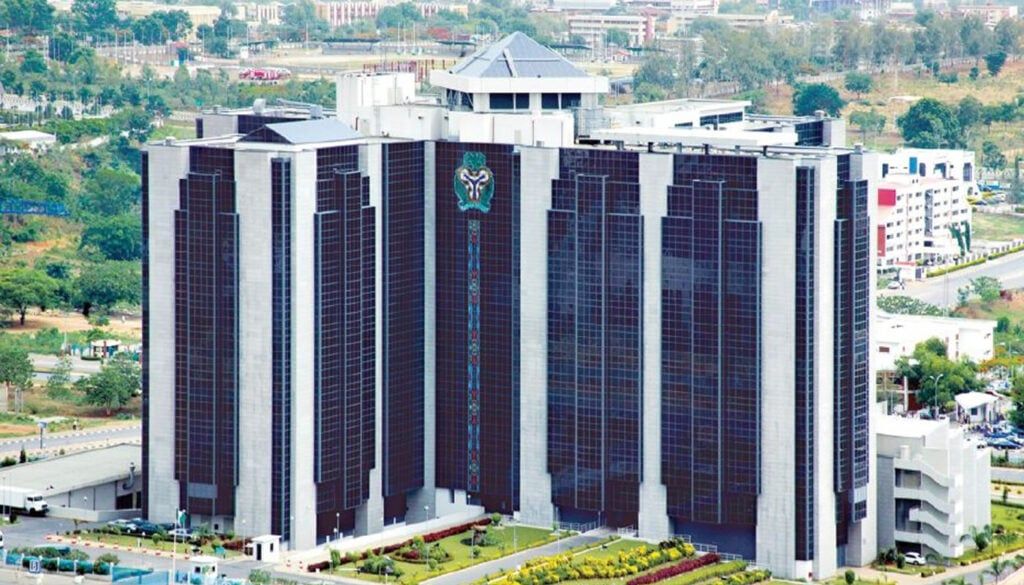
The Central Bank of Nigeria, acting on behalf of the Debt Management Office, will today, November 4, 2026, offer ₦800 billion worth of Nigerian Treasury Bills at auction, as maturing securities exceed ₦872 billion.
An Invitation to Tender obtained by Nairametrics shows that the offer covers the 91-day, 182-day and 364-day instruments, with the one-year bill taking the largest share.
The auction comes amid substantial liquidity in the banking system and follows the DMO’s decision to leave most investor bids unallotted at its previous Treasury Bills auction.
The ₦800 billion offer is made up of ₦100 billion each for the 91-day and 182-day Treasury Bills, and ₦600 billion for the 364-day instrument.
The one-year bill therefore accounts for 75 per cent of the total offer.
The auction coincides with ₦872.546 billion in maturing securities scheduled for settlement today.
The maturing securities comprise ₦67.677 billion in 182-day Treasury Bills and ₦804.869 billion in 364-day bills.
The advertised offer is ₦72.546 billion below the amount due to mature today.
Money Market Dealers are required to submit their bids through the CBN S4 WEB INTERFACE between 8:00 a.m. and 11:00 a.m. on November 4.
Allotment letters will be issued to successful bidders on November 5, with payment due by 11:00 a.m. that day.
If the entire ₦800 billion offer is allotted, repayments will exceed fresh issuance by ₦72.546 billion, leaving a net repayment surplus before other liquidity movements.
The final liquidity effect, however, will depend on the amount actually allotted, since the DMO may accept less than the advertised offer.
The auction also follows substantial Open Market Operations (OMO) maturities, which have helped keep liquidity in the banking system elevated.
The November 4 auction mirrors the October 28 offer, when the CBN advertised ₦800 billion across the same three Treasury Bills tenors.
At that auction, investor subscriptions reached ₦1.908 trillion, which was 2.38 times the advertised amount, but the DMO allotted only ₦71.16 billion.
The October 28 allotment represented about 8.89 per cent of the advertised ₦800 billion offer.
The 364-day bill drew ₦1.84 trillion in subscriptions against a ₦600 billion offer, but received only ₦38.38 billion in allotments.
Stop rates declined to 15.40 per cent for the 91-day bill, 15.79 per cent for the 182-day bill and 15.80 per cent for the 364-day bill.
The one-year stop rate fell by 10 basis points from 15.90 per cent, even though investors submitted bids as high as 18.24 per cent.
The October 28 auction was the second consecutive sale in which most investor bids went unfilled.
At the October 14 auction, about 74 per cent of bids were not allotted, while the one-year stop rate rose by five basis points to 15.90 per cent.
By comparison, the October 7 auction recorded ₦968.47 billion in allotments against a ₦900 billion offer, with the 364-day stop rate at 15.85 per cent.
The latest one-year stop rate of 15.80 per cent also remained below the 16.62 per cent recorded at the September 9 auction.
Liquidity in the banking system remained substantial ahead of today’s auction, offering a potential source of demand for government securities.
CBN financial data showed that the liquidity position exceeded ₦7.7 trillion at the close of business on November 3, following the settlement of ₦2.016 trillion in OMO maturities.
The Treasury Bills maturities of ₦872.546 billion due for repayment today are more than six times the ₦130.72 billion recorded around the October 28 auction.
Banking-system liquidity stood at ₦8.59 trillion ahead of the October 28 auction, supported by about ₦2.13 trillion in OMO maturities.
At the October 22 OMO auction, the CBN raised ₦2.63 trillion at stop rates of 17.63 per cent and 17.14 per cent.
Those OMO stop rates were higher than the Treasury Bills stop rates recorded at the October 28 auction.
The larger volume of maturing Treasury Bills could support reinvestment demand, as investors receive repayments and consider new government securities.
However, strong subscriptions do not necessarily translate into equally large allotments, as the October 28 auction showed.
The DMO’s willingness to limit allotments rather than accept higher borrowing rates has also coincided with declining Treasury Bills stop rates.
Today’s auction result will therefore show whether selective allotments continue as substantial maturities return funds to investors.