




Nigeria’s headline inflation rate slowed to 14.63 per cent in September 2026 from 15.39 per cent in August, extending the country’s disinflation trend for a fourth consecutive month, according to the National Bureau of Statistics.
The latest figure is 6.35 percentage points lower than the 20.98 per cent recorded in September 2025.
Month-on-month headline inflation also slowed to 0.06 per cent in September from 0.71 per cent in August, showing a slower rise in average prices.
The NBS report showed mixed movements across urban and rural inflation. Food inflation declined on a month-on-month basis, while core inflation rose compared with August.
Urban inflation stood at 15.64 per cent year-on-year in September 2026, while the corresponding twelve-month average was 15.90 per cent.
The annual rate was 12.58 percentage points lower than the 28.48 per cent recorded in September 2025.
On a month-on-month basis, urban inflation rose to 0.53 per cent in September from 0.28 per cent in August, showing that price increases in urban areas picked up during the month.
Rural inflation stood at 12.46 per cent year-on-year, with its twelve-month average at 15.32 per cent.
The annual rate was 10.35 percentage points below the 25.67 per cent recorded in September 2025.
Month-on-month rural inflation fell to -0.89 per cent in September from 1.79 per cent in August.
The NBS reported a 2.68 percentage-point decline in the rural monthly inflation rate.
The twelve-month average urban inflation rate fell by 12.58 percentage points year-on-year.
The twelve-month average rural inflation rate declined by 10.35 percentage points over the same period.
The figures show that while annual inflation eased in both urban and rural areas, monthly price movements differed, with urban inflation accelerating and rural inflation declining.
Food inflation falls, core inflation rises
Food inflation stood at 19.59 per cent year-on-year in September 2026, down from 20.16 per cent in September 2025.
On a month-on-month basis, food inflation fell to -1.55 per cent, compared with 1.02 per cent in August, a decline of 2.57 percentage points.
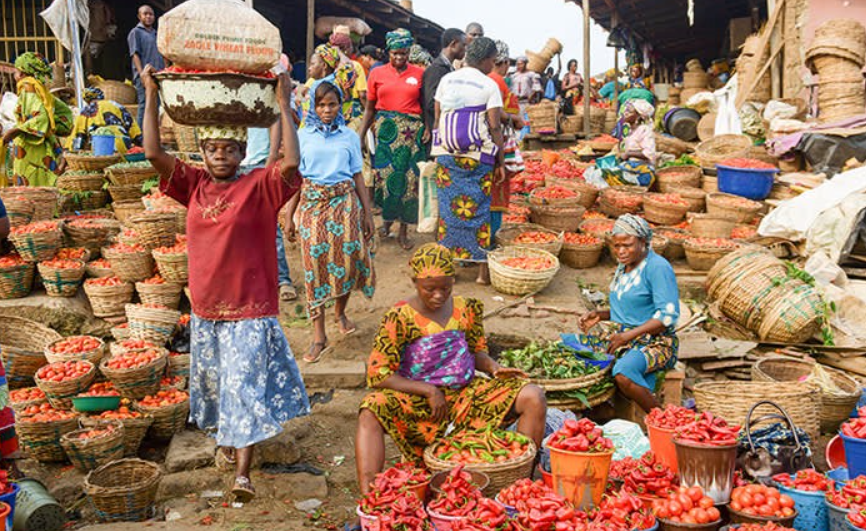
The NBS attributed the monthly movement to price changes in several food items, including grains, rice, eggs, onions, palm oil, vegetables, potatoes, plantain and tomatoes.
The average annual food inflation rate for the twelve months ending September 2026 was 15.72 per cent, down 12.66 percentage points from 28.37 per cent in September 2025.
Core inflation, which excludes volatile agricultural produce and energy prices, moved in the opposite direction on a monthly basis.
Annual core inflation stood at 12.95 per cent in September, down from 22.11 per cent a year earlier.
Month-on-month core inflation rose to 1.11 per cent from -0.06 per cent in August.
The twelve-month average core inflation rate was 16.54 per cent, compared with 25.68 per cent in September 2025.
The figures indicate that the monthly fall in food prices helped to moderate headline inflation, even as underlying price pressures, measured by core inflation, strengthened compared with August.
The naira strengthened to ₦1,333 per dollar at the Nigerian Foreign Exchange Market on October 14, 2026, ahead of the release of the September inflation report.
The currency movement came as market participants awaited the latest inflation data, which gives an update on the pace of price increases in the Nigerian economy.