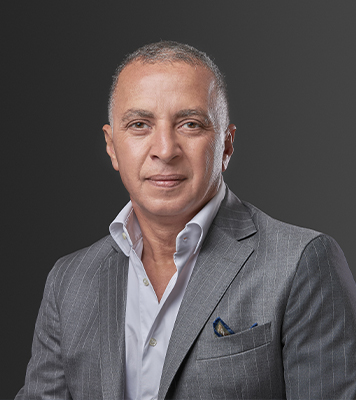
Egyptian billionaire Ahmed Elsewedy’s Elsewedy Electric has won a $2.2 billion contract, alongside China’s Sinohydro, to expand Saudi Arabia’s Rabigh 2 Independent Power Plant.
In a statement issued on Wednesday, October 14, Elsewedy Electric said the contract was awarded to a consortium made up of Elsewedy Electric Power Systems Projects and Sinohydro, with commercial operations targeted for May 2029.
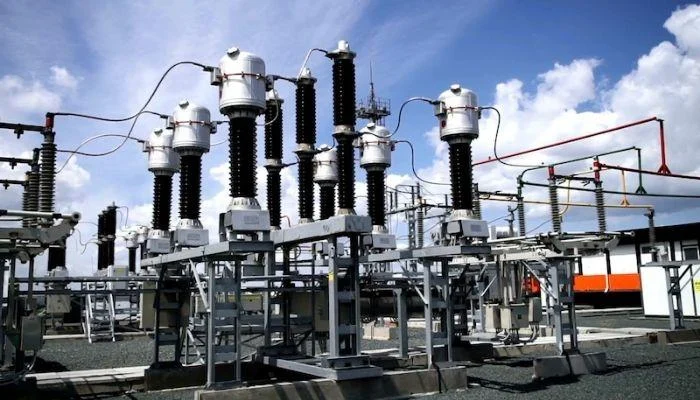
The project will add 2.3 gigawatts (GW) of electricity generation capacity to Saudi Arabia’s national grid, as the Kingdom speeds up investment in electricity infrastructure under its Vision 2030 economic transformation programme.
Elsewedy Electric disclosed that the contract was awarded by Al Mourjan Two for Electricity Company and covers the engineering, procurement and construction of a natural gas-fired power plant using combined-cycle technology.
The consortium will oversee the design, equipment supply, installation, construction, commissioning and performance testing of the facility, along with associated civil works and connection to the national electricity grid.
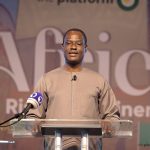
“Signing this EPC contract is a proud moment for our joint venture and a reflection of the trust our client has placed in our ability to deliver complex power infrastructure safely and to the highest international standards,” said Hesham Hegazy, Chief Executive Officer of Elsewedy Electric PSP.
The expansion will feature six Siemens gas turbines and two steam turbines, together with six heat recovery steam generators, cooling infrastructure and electrical control systems.
According to the company, overall project progress has exceeded 39 per cent, following preliminary construction activities carried out under an earlier limited notice to proceed.
The project has also recorded more than five million safe man-hours, reflecting the consortium’s emphasis on safety during construction.
The additional capacity is expected to support rising electricity demand across Saudi Arabia’s industrial, commercial and residential sectors.
Saudi Arabia has been expanding its electricity generation infrastructure as part of efforts to reduce dependence on liquid fuels and increase the use of natural gas and renewable energy.
The Rabigh 2 expansion forms part of investments in combined-cycle gas-fired power generation, designed to improve efficiency while meeting the country’s growing electricity requirements.
Data from the Kingdom’s General Authority for Statistics showed that licensed electricity generation capacity reached approximately 92.5 GW in 2024.
Electricity supplied to the national grid stood at 402.6 terawatt-hours, while consumption rose 4.1 per cent year-on-year to 340.4 terawatt-hours.
Under its energy transition strategy, Saudi Arabia aims to generate approximately 50 per cent of its electricity from renewable sources by 2030, with natural gas supplying the remaining share.
The additional 2.3 GW from Rabigh 2 is expected to strengthen electricity supply as Saudi Arabia continues to expand its energy infrastructure to meet industrial, commercial and residential demand.
Founded in 1938, Elsewedy Electric is one of Egypt’s largest electrical equipment and infrastructure companies, with operations spanning energy, construction and digital solutions.
The Egyptian Exchange-listed company reported revenue of approximately $5.7 billion in 2025 and maintains a significant international presence.
Elsewedy Electric employs about 22,000 people, operates 34 production facilities and maintains 60 international offices, with export capacity covering more than 100 countries.
In 2018, the company partnered with Siemens and Orascom Construction to deliver a 14.4-gigawatt power project in Egypt, comprising some of the world’s largest combined-cycle power plants.
In March 2021, the Federal Government of Nigeria was exploring technical collaboration with Egypt to support the implementation of its Presidential Power Initiative with Siemens.
Saudi Arabia is targeting 60 gigawatts of renewable energy capacity by 2030, as part of efforts to reduce dependence on conventional fuels.