

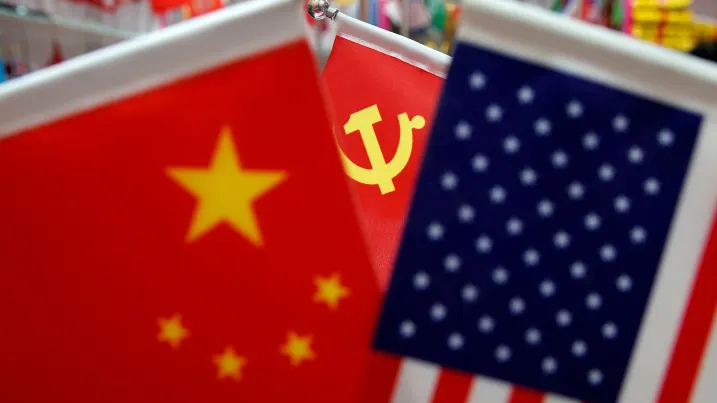
China on Monday rejected calls from United States Artificial intelligence executives for companies to slow the development of advanced artificial intelligence technology.
“Fear mongering, confrontation, competition will just disrupt [the] process of global AI governance,” Guo Jiakun, a spokesperson for China’s Foreign Ministry, said on Monday, according to Reuters.
He was responding to comments by U.S. tech executives, including Anthropic CEO Dario Amodei, OpenAI CEO Sam Altman and Elon Musk, who have called for the industry to slow the development of AI over concerns about the risks posed by rapid advances in the technology.
Meanwhile, China’s Minister of State Security, Chen Yixin, called for faster development of systems to prevent and manage AI-related security risks in an article published on Sunday.
Chen said AI had become “the main battleground for global technological competition and a new arena for strategic rivalry among major powers”, stressing the need for the technology to develop in a “healthy and orderly” manner.
AI-related stocks fell sharply on Monday, with SoftBank, one of OpenAI’s biggest investors, plunging 10 per cent in Japan.
““Not building the technology deprives humanity of benefits or simply places AI in the hands of authoritarian powers, while building it too fast is reckless,” Amodei said in an essay published on Saturday.
However, he said the pace of development would be limited by the advantage U.S. companies have over “authoritarian regimes, chiefly the Chinese Communist Party.”
“If we slow down by more than this amount, then (unpaced) CCP-associated projects will pull ahead, creating significant national security risk,” Amodei said.
U.S. President Donald Trump has also warned against the country losing its strategic advantage in the AI race. During a visit to Ireland, Trump rejected calls from AI executives to slow development, saying the U.S. was ahead of China and that he wanted to maintain that lead because “whoever wins AI, wins.”