


The Federal Government has called on banks and payment service providers to unlock Nigeria’s estimated $14.8 billion annual gender financing opportunity and expand access to financial services for women.
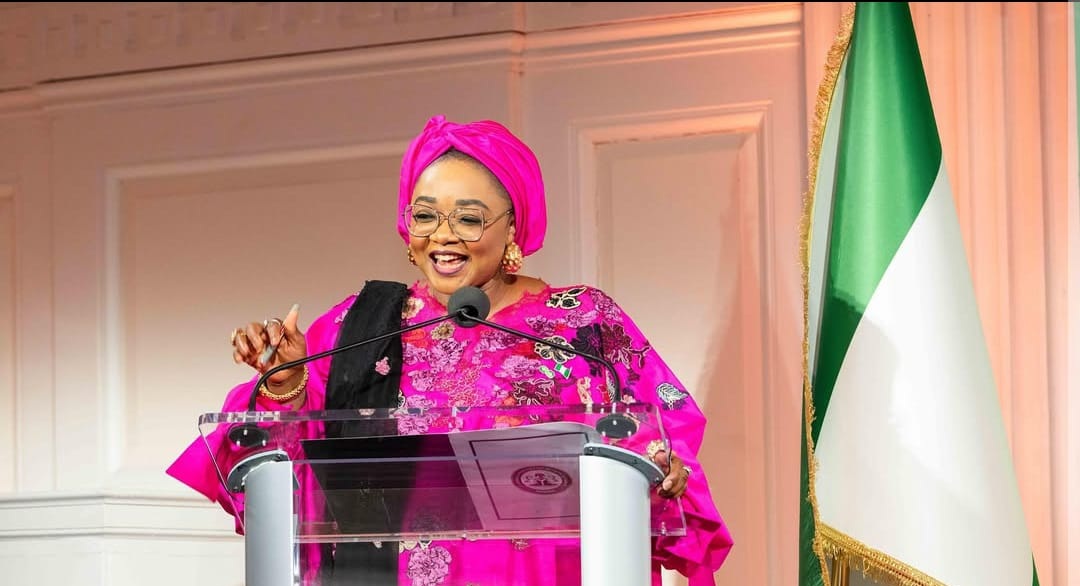
The Minister of Women Affairs and Social Development, Hajiya Imaan Sulaiman-Ibrahim, made the call on Wednesday at the Second National Gender Inclusion Conference, according to Nairametrics.
The conference, themed “Designing for Delivery: Financing, Systems and Scale for Women’s Economic Transformation,” focused on strengthening financing systems and expanding economic opportunities for women.
The minister said the challenge of achieving economic transformation for Nigerian women was not a lack of ambition, noting that Nigeria had ambition in abundance, but that “the difficulty has been the design.”
Sharing lessons from her ministry’s field experience, she said financial systems were often designed around collateral requirements, even though women typically have less access to such assets.
She said this gap informed the World Bank-supported Nigeria for Women Project Scale-Up, which organises women into Women Affinity Groups where they can save collectively, lend to one another and expand their businesses.
According to her, the Scale-Up has now expanded its reach to 4.5 million women through 300,000 groups across the country, following the mobilisation of more than 560,000 women into over 26,000 groups during the first phase.
She added that participating women saved more than N4.9 billion from their own resources and accessed about N15.6 billion in livelihood grants.
She called on banks and other financial institutions to help bridge Nigeria’s multi-billion-dollar gender financing gap by rethinking their financial models to better serve women.
The minister added that the ministry was willing to provide access to its programme pipelines to institutions interested in testing and scaling innovative financial products for women.
“To our banks, guarantors and payment operators, I would respectfully invite you to design for the woman who exists rather than the borrower our models were built for.
“The International Finance Corporation estimates that closing Nigeria’s gender financing gap could unlock some $14.8 billion annually. That is not a social return. It is a commercial one, and it remains unclaimed,” she said.
She proposed “alternative-data credit scoring; guarantee-backed lending that recognises group liability, for which the Affinity Groups are ready-made; and low-cost interoperable payments that work on the handset she already owns.”
Vice President Kashim Shettima, represented by the Special Adviser to the President on General Duties, Dr Aliyu Modibbo Umar, said every meaningful commitment to advancing women’s economic empowerment must have three key elements: a clear owner, a measurable target and a defined deadline.
According to him, such commitments must be clearly defined, monitored and regularly reviewed, with successful initiatives recognised through the nation’s first National Gender and Financial Inclusion Awards.
He said effective delivery would, however, require adequate financing, underscoring the need for greater participation from financial institutions, fintech companies, investors and development partners.
The SheIsIncluded Initiative’s Aso Accord on Financial and Economic Inclusion, signed on April 25, 2024, was established as a strategic framework to address gaps in financial and economic inclusion.