







Hotels in Dunedin, New Zealand, are already receiving bookings for 2028, with some accommodation providers filling up two years ahead of the city’s first total solar eclipse in more than 850 years.
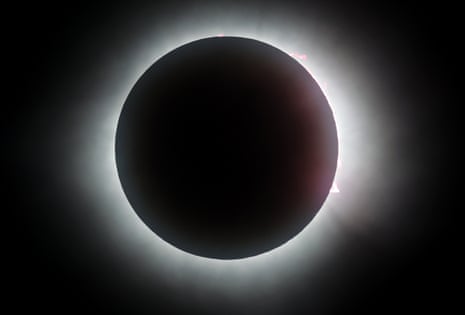
At 4:17 p.m. on July 22, 2028, the moon will pass directly in front of the sun, casting a roughly 100-kilometre-wide shadow across parts of southern New Zealand.
Areas within the path, stretching from the tourist hotspot of Queenstown in the west to Dunedin in the east, will experience daytime darkness for 2 minutes and 51 seconds.
With two years still to go, hotels are already fielding inquiries from eclipse watchers. Dunedin Leisure Lodge was fully booked by Thursday for its “solar eclipse package,” which includes complimentary eclipse glasses.
An astronomer and director of Tūhura Otago Museum,
Dr Ian Griffin, said, “The last one visible from Dunedin was in 1163, which was before humans reached New Zealand.
“So we will be the first people in Dunedin ever to see a solar eclipse from this part of the world, which is quite exciting.”
It will also be the first total solar eclipse visible anywhere in New Zealand since 1965.
“That three minutes of darkness, if it’s clear, will be absolutely memorable for anybody who sees it,” Griffin said.
The eclipse will occur during New Zealand’s winter, shortly after the country celebrates Matariki, the Māori New Year. Matariki is the Māori name for a cluster of stars known elsewhere as the Pleiades. The cluster is visible from New Zealand for 11 months of the year before disappearing from the night sky for about a month during winter and reappearing around the winter solstice.
Dunedin is planning a night-sky festival that will begin with Matariki celebrations and run through to the solar eclipse.