



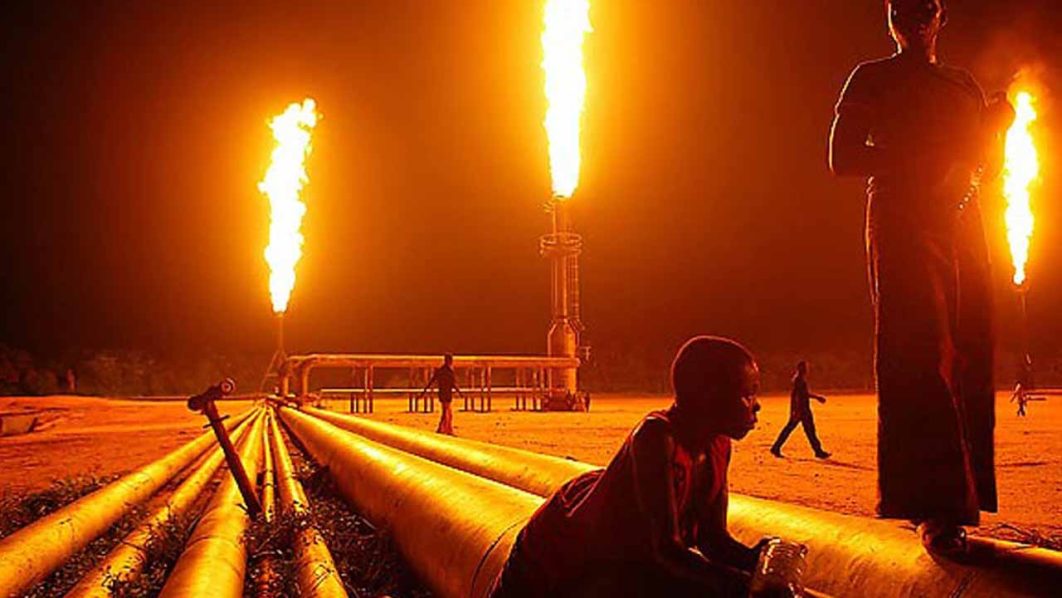
Nigeria flared about 76.92 billion standard cubic feet of natural gas between January and May 2026, despite rising Liquefied Petroleum Gas (cooking gas) prices and ongoing concerns over domestic energy shortages, according to data from the Nigerian Upstream Petroleum Regulatory Commission.
An analysis of the Commission’s monthly gas production status reports, obtained from its website on Sunday, showed that oil and gas operators flared a total of 76,919.78 million standard cubic feet of gas during the five-month period.
The volume of gas burnt off could have been utilised for electricity generation, industrial activities, compressed natural gas programmes, and domestic cooking gas supply in a country facing escalating energy costs and supply challenges.
A breakdown of the data showed that Nigeria flared 17.17 billion standard cubic feet of gas in January, representing 7.10 per cent of the country’s total gas production for the month. The volume declined to 14.09 billion standard cubic feet in February, accounting for 6.44 per cent of output.
In March, gas flaring rose to 15.58 billion standard cubic feet, equivalent to 6.40 per cent of total production, according to the Nigerian Upstream Petroleum Regulatory Commission. The volume eased slightly to 14.52 billion standard cubic feet in April, although the proportion of gas flared increased to 6.94 per cent of total output.
In May, Nigeria flared an average of 0.57 billion cubic feet of gas per day, amounting to about 15.58 billion standard cubic feet for the month, while the gas flare rate stood at 6.9 per cent.
The latest figures come amid persistent concerns over high energy costs and the availability of alternative fuels for households and businesses. Market checks showed that the price of Liquefied Petroleum Gas, commonly known as cooking gas, surged from an average of N1,000 per kilogramme in January and February to as much as N2,400 per kilogramme in recent days.
Operators said the situation has been worsened by the inability of local LPG producers to meet domestic demand. They noted that supplies from the Dangote Petroleum Refinery have declined due to increased internal consumption of LPG, rather than exports, contrary to speculation in some quarters.
“The recent decline in LPG supply from the Dangote refinery, which has created a crisis in the domestic market, isn’t because of exports but is due to their internal utilisation for enhancing petroleum production capacity,” a source familiar with the development told PUNCH.
Although Nigeria holds Africa’s largest proven gas reserves, estimated at over 200 trillion cubic feet, a substantial share of associated gas produced alongside crude oil is still being flared at oilfields.
Energy experts have long argued that cutting gas flaring could significantly boost domestic supply and strengthen the government’s Decade of Gas agenda, helping to improve energy availability and support industrial growth in Nigeria.
The NUPRC data show that the country has yet to fully end the long-standing practice of gas flaring.
However, despite its persistence, the commission reported in its May gas bulletin that average daily gas production rose to 7.93 billion cubic feet per day, indicating continued growth in upstream output.
The report also noted that the 6.9 per cent flare rate recorded in May reflects Nigeria’s ongoing efforts toward eliminating routine gas flaring by 2030.
The Federal Government has consistently reaffirmed its commitment to ending routine gas flaring, in line with its climate obligations under the Paris Agreement and through initiatives such as the Nigerian Gas Flare Commercialisation Programme.