



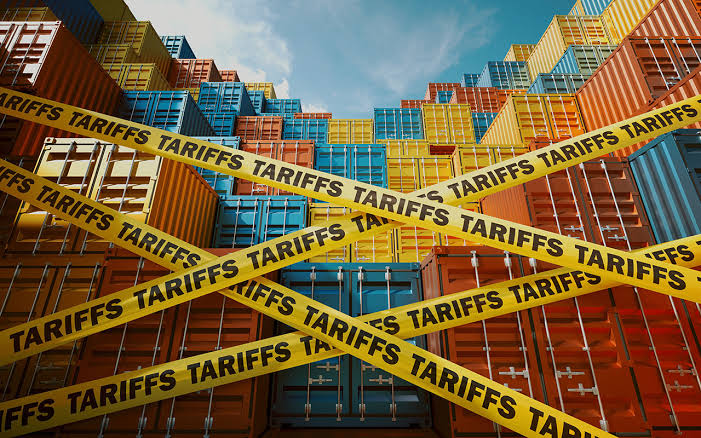




Major business groups and manufacturers in Nigeria have voiced strong opposition to the proposed Customs and Excise Tariff (Amendment) Bill 2025, warning that the legislation could worsen the country’s already challenging business environment if eventually passed into law.
The opposition comes as the bill advances through the National Assembly and seeks to replace the current flat-rate excise duty on sugar-sweetened beverages with a percentage-based levy linked to retail prices.
In exclusive interviews with Nairametrics, industry stakeholders, including the Abuja Chamber of Commerce and Industry, the Nigeria Employers’ Consultative Association, and the Manufacturers Association of Nigeria, argued that the proposed changes could increase production costs, discourage investment, and place additional pressure on businesses already grappling with economic headwinds.
It was speculated that the prices of soft drinks and other sugar-sweetened beverages could rise following the approval of a new excise duty framework that would replace the current fixed-rate tax with a percentage-based levy tied to retail prices.
Although the Senate is yet to complete the legislative process on the bill, the upper chamber recently approved the measure during plenary while considering and adopting the report on the Customs, Excise Tariff, etc. (Amendment) Bill.
Business groups say the proposed legislation comes at a difficult time for manufacturers and employers, warning that additional taxes could further strain businesses already dealing with high operating costs, foreign exchange volatility, inflation, and weak consumer purchasing power.
Responding to questions from Nairametrics, Prof. Adesoji Adesugba, First Deputy President of the ACCI, said the proposed legislation could further increase the burden on businesses and investors.
He urged lawmakers to reconsider the measure.
“We urge the National Assembly to pause, to reflect, and to consider carefully what the Customs, Excise and Tariff Amendment Bill means for businesses, investors, and working Nigerians. This is not the moment for legislation that adds to the burden of doing business in Nigeria.”
Adesugba argued that while concerns about rising non-communicable diseases such as diabetes, obesity, hypertension, and cardiovascular diseases are legitimate, the proposed amendment is fundamentally a tax measure rather than a health intervention.
“This is not a health policy. It is a tax policy with health branding, and Nigerians deserve to know the difference.”
Similarly, Director General of Nigeria Employers’ Consultative Association (NECA), Adewale-Smatt Oyerinde, expressed surprise that the bill had progressed so far in the legislative process, saying employers expected lawmakers to be more sensitive to prevailing economic realities.
According to him, businesses are already making difficult decisions to keep operations running, retain workers, and maintain production despite mounting economic challenges.
“Does the Senate need to be reminded that doing business in Nigeria is already extraordinarily difficult? That manufacturers, employers, and investors are not operating from any position of comfort; they are making painful decisions every single day just to keep workers employed and production lines running?”
Director-General of Manufacturers Association of Nigeria, Segun Ajayi-Kadir, also criticised the proposal, noting that the association had repeatedly engaged policymakers over the impact of excise taxes on manufacturers.
He explained that manufacturers have spent several years trying to recover from the disruptions caused by the COVID-19 pandemic and have continued to contend with rising production costs, making additional tax burdens difficult to absorb.
According to him, the proposed legislation represents a setback to MAN’s long-standing advocacy for a more supportive operating environment for manufacturers in Nigeria’s food and beverage sector.
Oyerinde further urged lawmakers in the House of Representatives to reject the bill, arguing that it contradicts ongoing efforts by the Federal Government to attract investment and boost economic growth.
“The CETA Bill must not pass. We call on the House of Representatives to reject it, and to send a clear message that Nigeria’s legislature understands what this economy needs.”
What the Customs, Excise and Tariff Amendment Bill seeks to do
Under the current tax regime, manufacturers and importers of sugar-sweetened beverages pay an excise duty of N10 per litre on products such as carbonated drinks, energy drinks, and other sweetened beverages.
The lawmakers said the levy was introduced to discourage excessive sugar consumption and generate additional revenue for healthcare spending.
However, policymakers backing the amendment argue that inflation has significantly eroded the real value of the tax over time, reducing both its effectiveness as a public health tool and its contribution to government revenue.
To address this challenge, the proposed amendment seeks to replace the existing flat-rate levy with a percentage-based excise duty linked to the retail price of sugar-sweetened beverages. The exact structure of the levy would be determined by the Minister of Finance in line with global best practices.
The Centre for the Promotion of Private Enterprise Centre for the Promotion of Private Enterprise (CPPE) had called on the House of Representatives to reject the Sugar-Sweetened Beverage Tax Bill.
According to a statement signed by its Chief Executive Officer, Dr. Muda Yusuf, the bill is poorly timed given prevailing macroeconomic pressures on manufacturers and could undermine efforts to reduce the cost of doing business in Nigeria.
The group further warned that the proposed tax would add to existing levies already affecting the non-alcoholic beverage industry, intensifying cost pressures across the value chain.
Meanwhile, as far back as 2024, the National Action on Sugar Reduction, a coalition advocating stronger health policies on sugar-sweetened beverages, criticised the current excise duty of N10 per litre, arguing that it falls significantly below recommendations by the World Health Organization.


