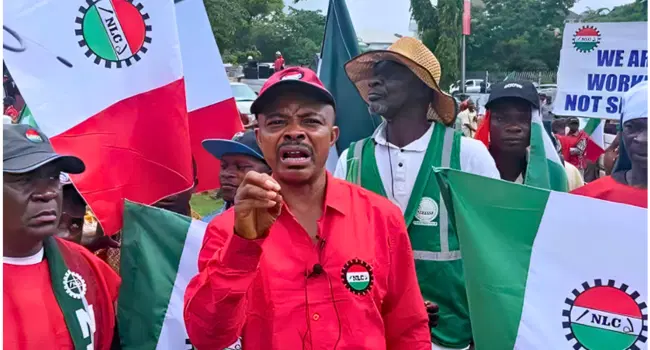


The Nigeria Labour Congress has announced plans to begin negotiations for a new national minimum wage by July 2026, alongside a demand that workers nationwide receive 100 per cent of their basic salaries until the talks are concluded.
The position was outlined in a joint May Day address delivered at Eagle Square in Abuja by NLC President Joe Ajaero and Trade Union Congress President Festus Osifo.
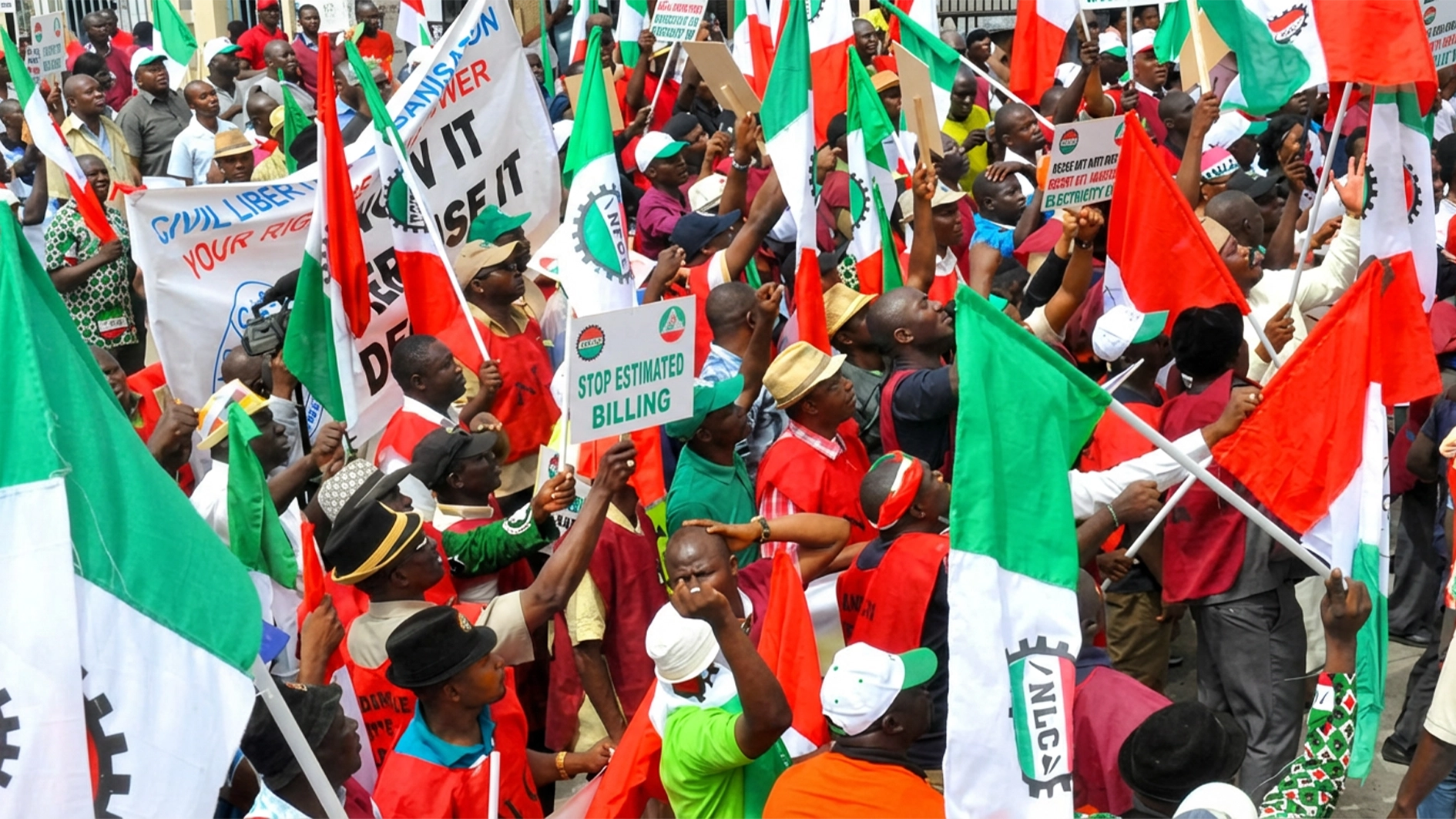
Addressing thousands of workers during the 2026 Workers’ Day celebration, the labour leaders said a wage review had become imperative in light of deepening economic hardship, rising inflation, growing insecurity, and the continued erosion of workers’ purchasing power.
“As part of this resolve, we announce that the process for renegotiating the National Minimum Wage, which expires early next year, will commence by July 2026, to avoid the painful delays of the past,” the labour leaders said in the jointly delivered speech.
Nigeria’s N70,000 minimum wage was signed into law by President Bola Tinubu on July 29, 2024, amending the 2019 Act after prolonged negotiations among the Federal Government, organised labour, and the private sector aimed at cushioning the impact of rising living costs.
However, despite the passage of successive minimum wage laws, implementation nationwide has repeatedly encountered major challenges.
Labour leaders therefore called on workers to stand united in pressing for what they termed a genuine living wage that aligns with current economic realities.
“In addition to this and with your support, we demand that from July of this year, every worker be paid 100 per cent of his basic salary till the new national minimum wage is signed into law to cushion the effects of the renewed crisis of survival facing Nigerian workers,” they added.
The labour centres used the May Day celebration to portray what they described as a bleak economic reality, insisting that official figures fail to capture the depth of hardship confronting ordinary Nigerians.
They argued that poverty has intensified despite claims of economic growth, with rising inflation, unemployment, and insecurity further eroding the living standards of workers and their families.
According to the labour leaders, the current economic structure appears to benefit only a privileged few rather than the broader population.
“We are told that GDP growth may reach about 3.6 per cent, driven largely by the service sector, yet the poverty rate continues to rise to about 65 per cent of the population,” the speech stated. “It is not getting better. It is getting worse.”
The unions also condemned what they described as excessive taxation on workers and low-income earners, urging the Federal Government to introduce tax relief measures to ease the burden of rising living costs and global economic pressures.
“Stop taxing the minimum wage. Stop taxing the poor,” the labour leaders declared.
The NLC and TUC further attributed the worsening economic climate to escalating insecurity nationwide, warning that it was undermining productivity, livelihoods, and overall national development.
They said many workers now face serious safety risks while commuting or going about their daily activities, pointing to incidents of attacks, kidnappings, and killings reported in several states.
“Nigerian workers may no longer continue going to work with this level of insecurity, and as we study the situation, we may be forced to advise our members across the nation to limit their movements and stay at home to avoid being kidnapped, abducted, or killed,” the labour leaders warned.