

Uber is developing a long-term strategy that extends beyond ride-hailing, aiming to turn its drivers’ vehicles into mobile data-collection platforms for autonomous driving and artificial intelligence development.
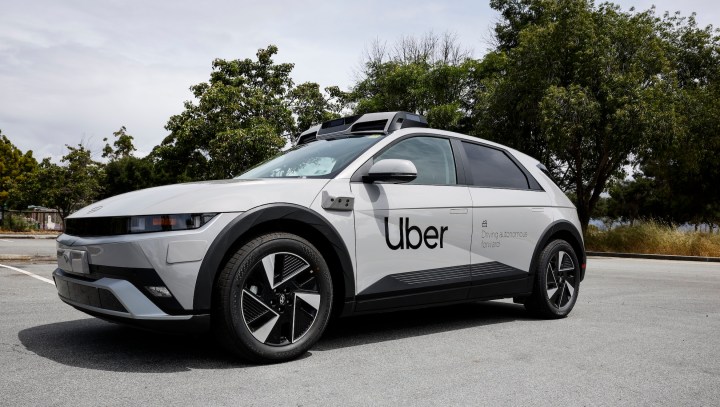
The company plans to equip cars operated by its human drivers with sensors capable of capturing real-world driving data, which could then be used by autonomous vehicle developers and other firms training AI systems to understand physical-world environments.
The chief technology officer at Uber,
Praveen Neppalli Naga, disclosed the initiative during an interview at TechCrunch’s StrictlyVC event in San Francisco on Thursday night.
He described the effort as a natural expansion of Uber’s newly introduced AV Labs programme, which was announced in late January.
“That is the direction we want to go eventually,” Naga said of equipping human drivers’ vehicles. “But first we need to get the understanding of the sensor kits and how they all work. There are some regulations — we have to make sure every state has [clarity on] what sensors mean, and what sharing it means.”
At present, AV Labs is powered by a limited fleet of sensor-fitted vehicles owned and operated directly by Uber, functioning independently of its broader driver base.
However, the company’s longer-term vision extends far beyond this initial setup. With millions of drivers worldwide, Uber sees significant potential in equipping even a small share of those vehicles with data-gathering technology.
If realised, such a rollout could create a vast, distributed network of mobile data platforms — delivering a scale of real-world driving data that few standalone autonomous vehicle companies could match with their own fleets.
According to Naga, the premise behind the programme is that autonomous vehicle development is no longer constrained by foundational technology, but by other emerging challenges.
“The bottleneck is data,” he said.
“[Companies like Waymo] need to go around and collect the data, collect different scenarios. You may be able to say: in San Francisco, ‘At this school intersection, I want some data at this time of day so I can train my models.’ The problem for all these companies is access to that data, because they don’t have the capital to deploy the cars and go collect all this information.”
Uber said it has established partnerships with 25 autonomous vehicle developers, including Wayve, which operates in London.
As part of the initiative, the company is developing what Naga described as an “AV cloud” — a centralised repository of labelled sensor data that partner firms can access to query, analyse and train their autonomous driving models.