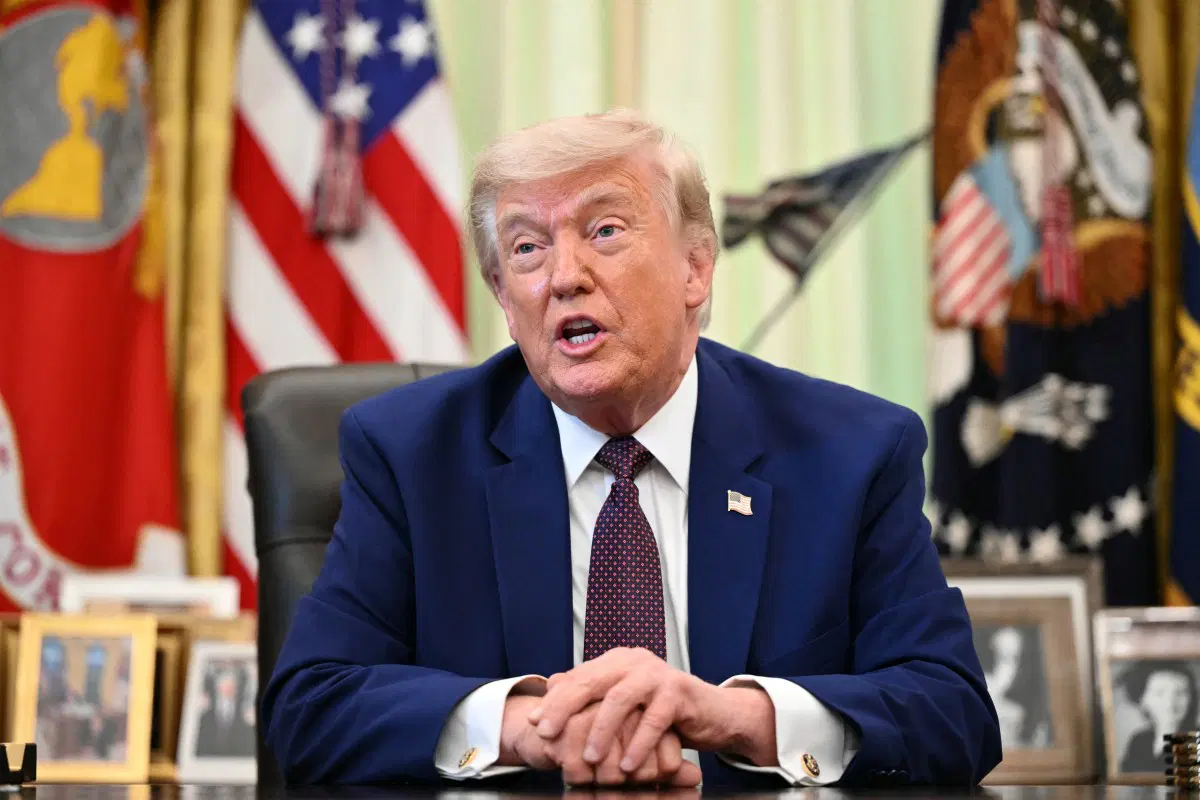


United States President Donald Trump has announced he will sign an executive order imposing a fresh 10 per cent tariff on all imports into the United States, adding this levy on top of existing US tariffs.
This move came just hours after the Supreme Court invalidated his earlier broad tariffs.
“Today I will sign an order to impose a ten percent global tariff under Section 122, over and above our normal tariffs already being charged,” Trump said in a press briefing at the White House.
Instead of retreating, Trump acted quickly by invoking Section 122 of the Trade Act of 1974. This provision permits a president to implement temporary import restrictions for a maximum of 150 days.
Trump further revealed plans for new investigations under Section 301 and additional trade laws. These probes could lead to further targeted tariffs against nations accused of engaging in unfair trade practices.
The shift follows a Supreme Court decision where Chief Justice John Roberts, authoring the majority opinion, stated that Trump’s reliance on emergency powers under the International Emergency Economic Powers Act “cannot bear such weight.” The ruling nullified tariffs Trump had placed on numerous countries since resuming office.
Africa ranked among the regions most severely affected by the now-overturned tariff measures.
South Africa encountered a 30 percent reciprocal tariff, marking the highest rate applied across the continent and sparking diplomatic friction.
Nigeria, the continent’s most populous country, was subjected to a 15 percent rate on its exports, endangering non-oil industries such as cocoa production.
Angola, a leading oil producer in Africa, initially faced a 32 percent tariff that was later negotiated down to 15 percent.
Smaller southern African countries experienced some of the harshest impacts, with Lesotho originally hit by a severe 50 percent tariff before a reduction.
Following the Supreme Court’s invalidation of the IEEPA-based tariffs, companies that previously paid these duties may be entitled to refunds totaling as much as $150 billion. However, the court did not resolve the issue of whether or how repayments should occur.