

The Federal Government has teamed up with the Development Bank of Nigeria and the World Bank to boost livestock production by improving access to finance and providing capacity-building support for small and medium-sized enterprises.
The initiative, part of the Livestock Productivity and Resilience Support programme, is being carried out in partnership with the Federal Ministry of Livestock Development and DBN’s subsidiary, Impact Credit Guarantee Limited.
According to a statement released by the ministry on Sunday, the capacity-building training is expected to benefit at least 200 Participating Financial Institutions and 300 SMEs across Nigeria’s six geopolitical zones.
The statement indicated that sessions have already been conducted in Enugu (South-East) and Adamawa (North-East), with future engagements planned for Ondo (South-West/South-South), Kano (North-West), and Kogi (North-Central).
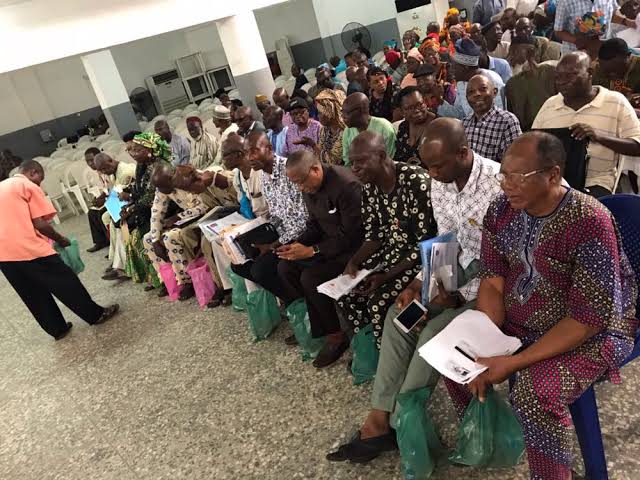
According to the statement, the latest phase of the nationwide DBN-SME/PFI Capacity Building Training programme took place on Wednesday in Yola, the capital of Adamawa State, bringing together livestock entrepreneurs, Participating Financial Institutions, state officials, and development partners from across the North-East.
The initiative is part of the World Bank-funded Livestock Productivity and Resilience Support (L-PRES) programme, aimed at boosting productivity and resilience across Nigeria’s livestock value chain by closing financing gaps and equipping operators with tools for sustainable growth.
Speaking at the event, the Minister of Livestock Development, Idi Mukhtar Maiha, described the partnership between DBN and L-PRES as “timely and strategic,” emphasizing that access to affordable finance continues to be one of the biggest challenges for livestock producers in Nigeria.
He noted that strict collateral requirements and rigid lending conditions imposed by conventional financial institutions have effectively excluded many livestock entrepreneurs from accessing credit.
“I think we need to shift from that perspective, and what we have seen here today is a definite move away from the normal to addressing the uniqueness of the livestock sector.
“We need to settle down with farmers, stay together with our producers, and understand the nature of the business, the dynamics of the sector, and be able to have access to credit facilities; that is the way to go,” he said.
The minister stressed the urgent need to close the gap between “survival and opportunity” in the livestock sector.
“There are huge opportunities in the livestock sector today,” he said, calling on financial institutions to rethink agricultural lending and adopt more inclusive frameworks for SME owners.
Also, the Managing Director and Chief Executive Officer of DBN, Dr. Tony Okpanachi, said the regional training programme was designed to foster collaboration between livestock operators and financial institutions, building mutual understanding and trust.
Okpanachi, represented by DBN’s Head of Business Development, Ayodele Ojosipe, explained that the programme provides a platform for lenders and borrowers to identify risks in livestock financing and jointly develop tailored solutions.
“This programme aims to improve access to finance and boost institutional capacity for livestock value chain operators by bringing DBN PFIs and SMEs under the same roof.
“As a wholesale development bank, we recognise the importance of reducing the risk burden on financial institutions. Through Impact Credit Guarantee Limited, we provide guarantees that encourage banks to lend to livestock enterprises with greater confidence,” he said.
Cicilia Dauda, a livestock operator who attended the Yola session, said the capacity-building programme provided practical guidance on navigating the financial system.
“Access to finance will enable us, livestock operators, to acquire needed equipment such as milk storage and processing facilities, overcome installation challenges, and scale up production,” she said.