




A United States congressional hearing has sharply criticised the Federal Government of Nigeria’s $9 million lobbying contract with a Washington firm, describing it as an apparent attempt to minimise grave human rights violations and religious freedom concerns in the country.
According to The PUNCH, the criticisms surfaced during a joint session of the House Subcommittee on Africa and the Subcommittee on the Western Hemisphere, held on Wednesday and titled ‘Defending Religious Freedom Around the World.’
The hearing featured testimony from former US Ambassador-at-Large for International Religious Freedom Sam Brownback and former chair of the US Commission on International Religious Freedom Dr Stephen Schneck.
Chairman Chris Smith defended the October 2025 designation of Nigeria as a Country of Particular Concern under the International Religious Freedom Act, calling it “long overdue” amid persistent deadly violence targeting Christian communities.
Smith expressed deep unease over lobbying efforts to challenge the designation.
The chairman lamented, “I just want to say to my colleagues that I am deeply concerned that Nigeria has hired the lobbying firm, DCI Group, to the tune of $9m, $750,000 a month.
“And a Nigerian billionaire has entered into a $120,000-a-month contract with Washington-based consulting firm Valcour, to influence Congress and the Executive Branch.
“They hire these firms; they come up with their very well-written talking points to say nothing to see here and unfortunately, how these firms are just so good at advocating for their client for religious freedom.”
Ranking Member Sara Jacobs criticised an overly narrow emphasis on Christian persecution, pointing out that violence affects both Christians and Muslims.
Jacobs noted the US had reduced foreign assistance to Nigeria by hundreds of millions of dollars, including programmes aiding faith leaders and conflict-hit areas.
She cited the termination of the Community Initiatives to Promote Peace programme, which she said had helped lower violence in certain regions.
“Despite the administration’s apparent interest in addressing conflict and religious tensions in Nigeria, it has cut hundreds of millions of dollars in foreign assistance to Nigeria, including assistance to faith leaders and to communities experiencing violence in the Middle Belt,” Jacobs said.
Jacobs cautioned against reducing the crisis to purely religious terms, saying “The violence in Nigeria is complex, affecting both Christians and Muslims, and the drivers of this violence are multifaceted and cannot be reduced to a single framing.”
She added that “oversimplistic narratives can further inflame religious tensions in communities.”
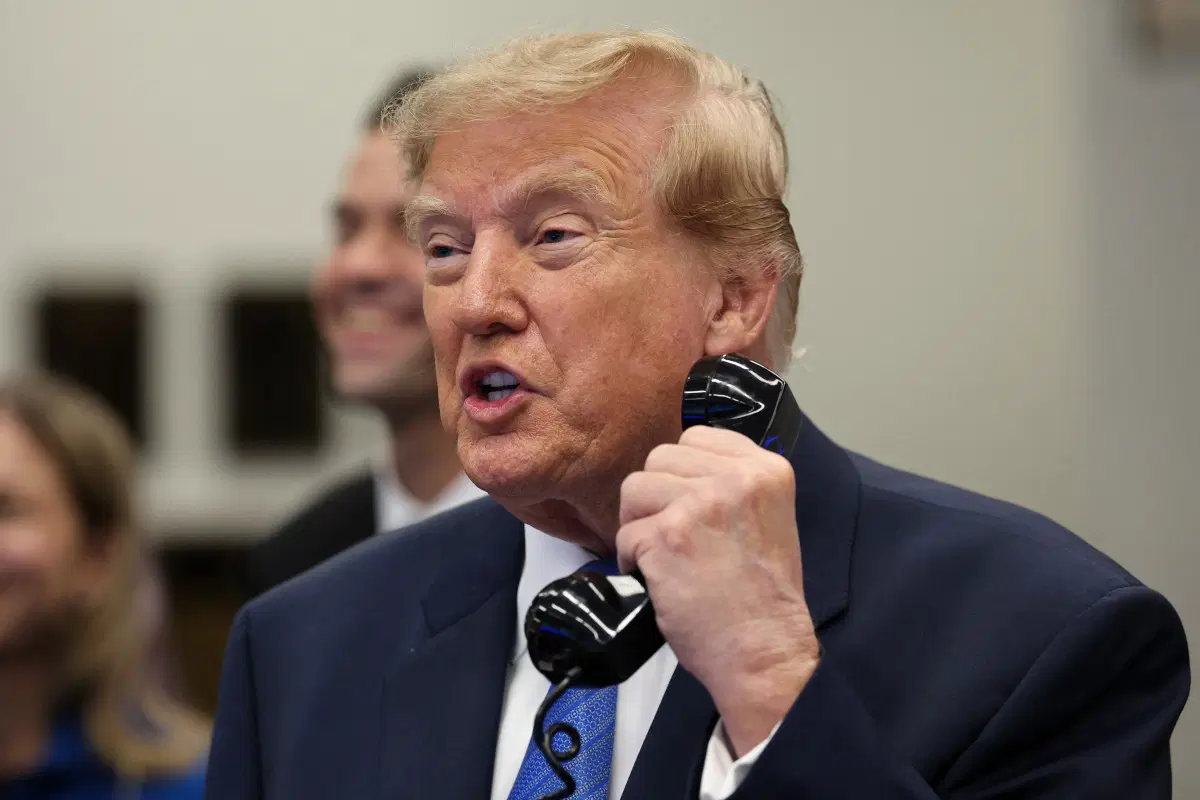
The lawmaker also questioned recent US military strikes in Sokoto State, stating, “And yet, it is clear that President Trump only cares about Christians in Nigeria, and his only real action to address this problem, military strikes over Christmas, has not even done anything to materially help those communities.
Ex-chair USCIRF Schneck concurred, noting the strikes’ cost likely surpassed prior funding for interfaith and humanitarian efforts, and warning they could bolster militant groups.
“In fact, it occurs to me that the cost of the Tomahawk missiles that were sent probably exceeded the amount of money that had previously been going to Nigeria to improve interfaith relations and provide humanitarian assistance,” he said.
“So, it is very concerning to me. In fact, I suspect, really, that strikes like that, to the extent that they have any effect at all, would likely drive some of these more militant organisations together in greater unity and perhaps mobilise them in the future. So I think that the strike was a mistake,” Schneck added.
Schneck described Nigeria’s challenges as involving Boko Haram and ISWAP terrorism, farmer-herder clashes, banditry, organised crime, mass displacement, and “a corrupt and frankly, a failing government” unable to ensure security and justice.
Lawmakers debated the sufficiency of the CPC designation alone.
Rep. Jefferson Shreve questioned its impact, leading Brownback to insist it requires sanctions and tangible measures.
“Until you put some bite into it, most of these dictators are just going to thumb their nose at you,” Brownback said, pushing for Magnitsky sanctions and targeted penalties.
Schneck supported this, calling CPC listings mostly “name and shame” without real consequences.
Rep Bill Huizenga acknowledged recent US actions had refocused attention on Nigeria, but Brownback voiced strong distrust of the Federal Government for abandoning power-sharing norms and failing vulnerable groups.
“This government has not given us any reason to trust them,” Brownback said.
The hearing reflected widespread scepticism toward Nigeria’s multimillion-dollar lobbying efforts.
US President Donald Trump has described the situation for Christians in Nigeria as genocide and previously threatened military intervention.
The Federal Government has rejected genocide claims, acknowledging serious security issues but denying targeted extermination.
Despite strains, US Africa Command collaborated with President Bola Tinubu’s administration for December 25 airstrikes on terrorist targets in Sokoto State.
Documents from January showed the Federal Government contracted DCI Group for $9 million to highlight Nigeria’s efforts protecting Christians.
Filings with the US Department of Justice indicated Kaduna-based Aster Legal engaged DCI Group for National Security Adviser Nuhu Ribadu.
The deal was signed December 17, 2025.
Separately, billionaire Matthew Tonlagha, vice-president of Tantita Security Services, signed a $120,000-a-month contract with Valcour to lobby US media, Congress, and the Trump administration for six months “for the purpose of strengthening the bilateral relationship between the US and Nigeria.”
Valcour was founded in 2023 by Matt Mowers, a former State Department adviser from Trump’s first term.


