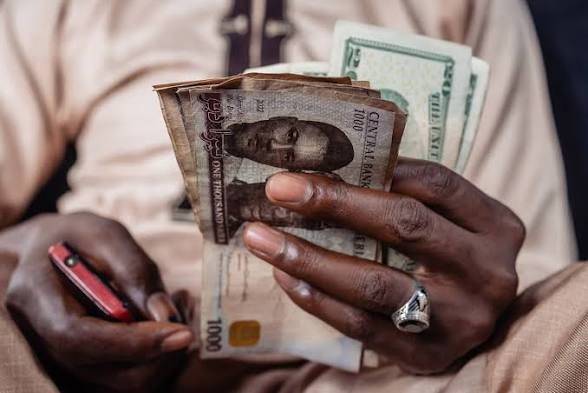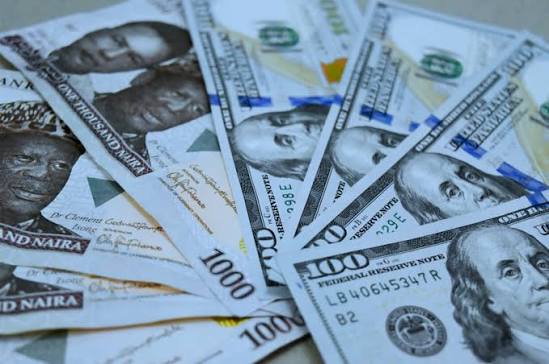


The naira ended the trading week weaker at the official foreign exchange market, closing at ₦1,421.9 per United States dollar as domestic supply constraints continued to outweigh supportive global dollar conditions.
Data from the Central Bank of Nigeria show that the local currency recorded marginal losses during the week despite a softer United States dollar globally.
The performance highlights ongoing distortions in Nigeria’s foreign exchange market, with pressure evident across both the official and parallel segments.
The naira’s week-long performance at the official market reflects mild but persistent depreciation amid thin FX liquidity.
CBN data shows that although the currency avoided sharp swings, it failed to sustain gains made earlier in the week.
The naira closed at ₦1,421.9 per dollar on Friday, compared with ₦1,421.5/$ on Thursday and ₦1,423/$ on Wednesday.
It traded at ₦1,420/$ on Tuesday and ₦1,420.5/$ on Monday, after opening the week at ₦1,425/$.
Compared with last Friday’s closing rate of ₦1,417.95/$, the currency ended the week weaker overall.
In the parallel market, the naira depreciated slightly to ₦1,491/$ on Friday from ₦1,490/$ the previous day, with research data showing weekly trading within a range of ₦1,483 to ₦1,491 per dollar, widening the gap between both markets to ₦70/$.
Speaking to Nairametrics, Dayo Omole, a currency trading expert based in Lagos, explained the situation.
“Nigeria has restrictions on foreign currency access and a limited dollar supply, so the naira may not strengthen as much in the parallel market. Sometimes, the parallel market rate can even move differently due to supply and demand pressures that are unrelated to the dollar’s global value.”
He added, “When the dollar falls globally, but Nigeria continues to struggle with foreign currency supply, the official and parallel market rates for the naira-dollar exchange can diverge further. This means the gap between the official naira value and the street rate can widen.”
Nigeria’s foreign exchange market has remained under strain following years of FX controls, multiple exchange rates, and limited dollar inflows.
Although recent reforms by the CBN aim to improve transparency and market efficiency, structural challenges continue to affect price discovery.
FX supply remains constrained due to weaker oil export receipts, subdued foreign portfolio investment inflows, and inconsistent diaspora remittances.
The persistence of a wide gap between official and parallel market rates reflects unmet demand and confidence issues among market participants.
Previous attempts to stabilize the naira through administrative measures provided temporary relief but failed to address underlying liquidity challenges.
While the CBN has made progress with reforms intended to unify rates and restore investor confidence, the pace of improvement has been slower than market expectations.
Nigeria’s external buffers and broader macroeconomic outlook provide context for the naira’s recent performance.
These indicators suggest short-term support for currency management, even as liquidity constraints persist.
Nigeria’s external reserves stood at $45.9 billion last week, according to the CBN, offering some capacity for market intervention.
The International Monetary Fund recently upgraded Nigeria’s 2026 economic growth forecast to 4.4 per cent from 4.2 per cent, citing optimism around ongoing reforms.
Despite global dollar weakness during the week, geopolitical risks and policy uncertainty in the United States added volatility to global FX markets, indirectly affecting frontier currencies like the naira.