
The Yobe State Government has announced that it has paid a total of N15.4 billion to clear the backlog of gratuities owed to state and local government retirees.
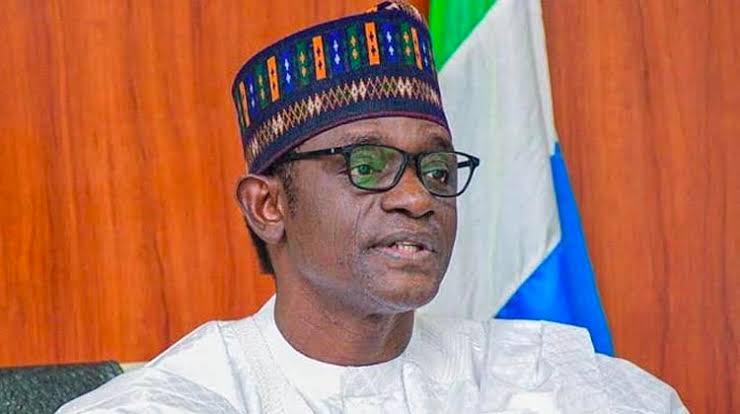
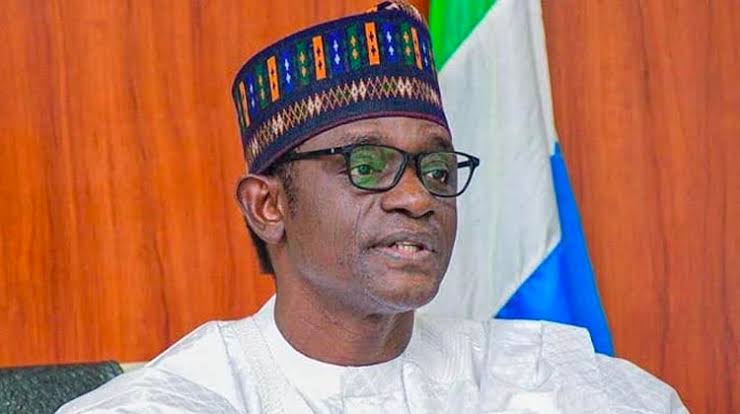
The disclosure was made on Wednesday by the Secretary to the State Government, Baba Wali, during a press briefing held in Damaturu to commemorate the six years in office of Governor Mai Mala Buni.
Mr Wali stated that following the payment of the gratuities, both the state and local governments are no longer indebted to any retiree in that regard.
He said that since 2019, the Yobe State Government has provided 250 operational vehicles and 500 motorcycles to various security agencies across the state to strengthen their operational capacity.
According to him, over 300 patrol and specialised operational vehicles have also been rehabilitated by the government, while the state facilitated the engagement of more than 2,000 vigilantes, hunters and hybrid force operatives to complement formal security efforts.
Mr Wali said the state government employed no fewer than 6,449 workers within the period under review and sponsored about 35 capacity-building training programmes for more than 6,395 civil servants.
He disclosed that a total of 500 kilometres of roads had either been completed or were currently under construction by the state government. The road projects include Geidam-Bukarti, Bayamari-Yunusari, Yunusari-Kanamma, Damagum-Gubana, Bulanguwa-Kumagannam, Nguru-Bulanguwa and Fika-Maluri.
Mr Wali also revealed that Triacta Nig Ltd., the contractor handling the construction of three three-level flyovers and underpasses in Damaturu, has promised to hand over the N22 billion project in the first quarter of 2026.
He said the state government constructed six new model schools, seven mega schools, nine new government girls’ day senior secondary schools, eight new co-educational government day senior secondary schools and an additional one for boys across the state.
Mr Wali added that over 4,000 teaching and non-teaching staff were recruited and posted to various primary and secondary schools, while 26,000 teachers were trained or retrained to improve their professional capacity.
Speaking on electrification, Mr Wali said, “In the area of electrification, 25 villages were electrified, while electricity was extended to over 200 different locations. We have also rehabilitated and strengthened Damaturu – Potiskum, Potiskum – Gashua, Gashua – Yunusari, Damaturu – Babbangida – Bayamari, Bayamari – Geidam – Bukarti, Bayamari – Yunusari, Potiskum – Kukar Gadu, and Maiduwa-Gadaka with 33KVA lines.”
He further stated, “We have also ensured provision of a 24-hour power supply to all the General Hospitals in the State as well as provision of generator sets to some Government establishments.”
Mr Wali said the state government has completed the construction of modern markets in Damaturu, Potiskum, Gashua, Nguru, Machina and Ngalda.
He added, “Furthermore, the construction of Potiskum Truck Transit Park and Mega Shopping Mall in Damaturu is also. Being the state with the largest production of high-quality sesame seeds, we have completed construction of four sesame seed processing factories in Damaturu, Potiskum, Nguru, and Machina towns to further boost commercial activities.”
Mr Wali also disclosed that the state government accessed significant grants through its public finance reforms. He said, “The state government, through its Public Financial Management (PFM) reforms, accessed about $10 million, equivalent to N3.8 billion grant after the valuation exercise of 2021 Disbursement Linked Indicators (DLIs) 1-9 and additional grant of $10 million equivalent to N3.8 billion for meeting COVID-19 additional financing.”
He added, “SFTAS and the Electronic Government Procurement System (e-GP) have fetched us commendation from the Federal Ministry of Finance and the World Bank. Similarly, the World Bank awarded us a grant of $5 million due to our reforms, which are in tandem with the world’s best practices in procurement, the Annual Auditor General’s Report, and other fiscal reforms.”