






Nigeria’s largest listed companies are committing substantial capital to property, plant and equipment as they seek to shield operations from inflationary pressures, currency instability and persistent infrastructure gaps, even as earnings show signs of improvement.
According to an analysis by BusinessDay of filings on the Nigerian Exchange, it was revealed that a small group of major corporates accounted for most PPE spending as of September 2025, with telecommunications firms, cement manufacturers, oil producers and banks dominating capital investment.
MTN Nigeria Communications Plc emerged as the largest spender, recording PPE of N539.6 billion at the end of the first nine months of 2025, representing an increase of nearly 59 percent from its full-year 2024 position.
The sharp rise reflects sustained capital expenditure on network expansion, fibre deployment and increased data capacity to meet accelerating demand across Nigeria’s fast-growing digital economy.
The increase in PPE spending points to a broader recalibration among Nigerian corporates, as inflation remains in double digits, the naira continues to weaken following the 2023 exchange-rate liberalisation, and companies increasingly absorb costs previously covered by public infrastructure.
MTN’s PPE rose from N339.9 billion in the 2024 financial year to N539.6 billion by September 2025, marking the most dramatic increase among the firms reviewed.
The telecoms operator has intensified investment to enhance network quality, reduce congestion and support data-led revenue expansion at a time when traditional voice revenues have largely stagnated.
Industry analysts say the scale of MTN’s spending reflects both necessity and opportunity in a market where mobile data usage continues to expand at double-digit rates.
Operators, however, face rising energy costs, heavy reliance on dollar-priced imported equipment and mounting regulatory pressure to improve service delivery.
“Telecoms are effectively forced to over-invest,” said one Lagos-based equity analyst. “If you don’t spend, churn rises quickly. But the returns are increasingly long-dated, especially with tariffs lagging inflation.”
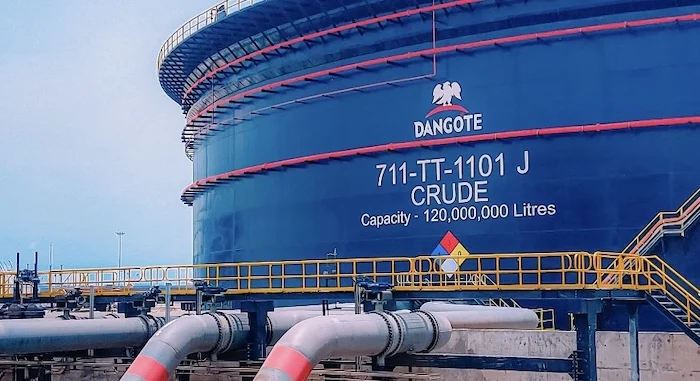
Dangote Cement Plc followed closely behind MTN, posting PPE of N461.8 billion as of September 2025, up from N423.0 billion in the 2024 financial year.
The cement producer’s capital commitments underscore its long-term confidence in Nigeria’s infrastructure needs, even as government capital spending remains constrained.
Cement manufacturers across the country have continued to upgrade production plants, expand alternative fuel capabilities and invest in logistics infrastructure to manage energy costs and supply chain disruptions.
Given the capital-intensive nature of cement production, PPE growth in the sector is often driven more by operational necessity than discretionary expansion.
The slower pace of growth compared to MTN suggests a more cautious approach, shaped by weaker construction activity, delayed government payments and price sensitivity in the housing market.
Seplat Energy Plc, Nigeria’s leading listed upstream oil and gas producer, recorded PPE of N156.5 billion in the first nine months of 2025, up from N95.0 billion at the end of 2024.
The nearly 65 percent increase reflects investments in production optimisation, gas infrastructure and asset integrity as the company seeks to stabilise output.
These investments come amid persistent challenges including crude oil theft, pipeline vandalism and regulatory uncertainty across the Niger Delta.
Despite volatile oil prices and heightened operational risks, upstream producers face limited room to defer spending, as under-investment can quickly lead to production declines.
In contrast to energy and telecoms, consumer goods manufacturers displayed a more cautious and uneven investment profile.
Nigerian Breweries Plc reported PPE of N116.5 billion in the first nine months of 2025, down from N136.5 billion in the 2024 financial year, representing a decline of about 15 percent.
The reduction suggests a defensive stance as brewers contend with weak consumer purchasing power, rising production costs and intense competition in the alcoholic beverages market.
Guinness Nigeria Plc followed a similar pattern, posting PPE of N103.4 billion compared with N128.3 billion in the prior year.
The decline reflects scaled-back expansion plans and a renewed focus on cost control and operational efficiency.
“These companies are in survival mode,” said a consumer sector analyst. “With real incomes compressed, it’s harder to justify aggressive capacity expansion when utilisation rates are already under pressure.”
The banking sector showed a more divergent approach to capital investment, reflecting differing strategic priorities among lenders.
Access Holdings Plc recorded PPE of N100.3 billion as of September 2025, a sharp drop from N260.8 billion at the end of 2024.
The decline suggests a slowdown in physical asset accumulation following the completion of major technology and infrastructure upgrades, alongside a shift toward asset-light digital banking models.
United Bank for Africa Plc also moderated its spending, reporting PPE of N91.8 billion compared with N103.0 billion in 2024.
Fidelity Bank Plc, however, significantly increased investment, raising PPE to N87.2 billion from N38.5 billion, representing growth of over 120 percent.
The contrast highlights how tier-two banks are investing aggressively to expand operations and enhance digital platforms, while larger banks focus on maximising existing assets and preserving capital amid tighter regulation.
Some of the largest percentage increases in PPE came from companies with relatively smaller asset bases.
Oando Plc recorded PPE of N74.9 billion in the first nine months of 2025, compared with N18.5 billion at the end of 2024.
The more than 300 percent surge reflects asset acquisitions and renewed capital investment following corporate restructuring and improved access to funding.
Although Oando’s absolute PPE figure remains modest compared to MTN or Dangote Cement, the growth rate signals renewed confidence in its long-term prospects, particularly in upstream and trading operations.
Beneath the surge in PPE spending lies Nigeria’s challenging macroeconomic environment.
High inflation has significantly raised replacement costs for assets, prompting companies to accelerate investments before prices rise further.
Currency depreciation has also inflated the naira value of imported machinery, boosting reported PPE figures even where real investment volumes have remained stable.
In some cases, PPE growth reflects foreign exchange translation effects rather than extensive new project development.
Nevertheless, continued capital commitments suggest management teams believe delaying investment could prove more expensive over time.
For investors, the key concern is whether these investments will generate adequate returns.
With interest rates elevated and consumer demand fragile, payback periods on major capital projects are extending.
Telecommunications and energy firms appear better positioned to monetise investments due to structural demand growth and export-linked revenues.
Consumer goods companies and banks face greater challenges as margins remain under pressure and regulatory risks persist.
“Capex alone doesn’t create value,” said one portfolio manager in Lagos. “What matters is pricing power, utilisation and cost discipline. Nigeria is forcing companies to spend more just to stand still.”
Overall, the PPE data points to corporate resilience rather than exuberance.
Nigeria’s largest companies are investing primarily to defend market share, maintain operational continuity and prepare for eventual macroeconomic stabilisation.
With public infrastructure still underdeveloped, private sector capital expenditure increasingly fills the gap left by the state.
For now, Nigeria’s biggest corporates appear willing to shoulder that burden, betting that scale, efficiency and patience will ultimately deliver long-term rewards.


