




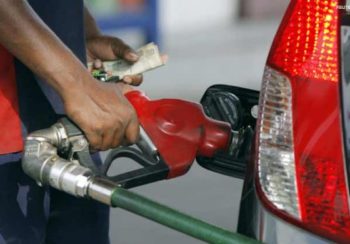

The competition in Nigeria’s downstream petroleum sector has intensified as several filling stations have reduced the pump price of Premium Motor Spirit below the N739 per litre benchmark recommended by the Dangote Petroleum Refinery.
Following the Dangote refinery’s decision in December to slash petrol prices from about N900 to N739 per litre, importers and depot owners have complained of heavy financial losses. Many operators, facing shrinking margins, were compelled to sell petrol at prices below their landing costs to remain relevant in the increasingly competitive market.
A weekend survey conducted by The PUNCH revealed that some retail outlets now dispense PMS at prices lower than those of MRS Oil, the primary partner endorsed by the Dangote refinery to spearhead the implementation of the N739 per litre price reduction.
As of Sunday, NIPCO stations sold petrol at N738 per litre, SAO filling stations offered the product at N735, while Akiavic sold at N737 per litre. An AP filling station located beside an MRS outlet in Mowe, Ogun State, also reduced its pump price to N736 per litre.
It was gathered that filling stations operating within the same locations now closely track the prices of rival outlets to avoid losing customers. Observations showed that motorists gravitate towards stations selling at the lowest prices, leaving outlets with higher pump prices struggling to attract patronage.
According to data from the Major Energies Marketers Association of Nigeria, the average landing cost of petrol stood at N762.38 per litre, while Dangote refinery’s ex-gantry price remained at N699 per litre. Despite this margin, importers still adjusted their retail prices downward in a bid to compete with Dangote-backed MRS outlets.
Earlier reports indicated that both Dangote and petroleum importers were incurring losses estimated to run into billions of naira as a result of the aggressive pricing environment.
Operators who spoke to our correspondent said the reduction in pump prices was not influenced by whether imported petrol was cheaper, but rather by the need to retain market share in a highly competitive landscape.
“This is not a function of whether imports are better or not, but simply a market strategy to get a good share of the market. However, it needs to be stressed that we are not at war with any marketer or depot operator nor any refinery,” an operator, who requested anonymity due to the stiff competition in the downstream sector, told The PUNCH.
On December 12, the Dangote refinery startled depot owners and marketers by cutting the gantry price of petrol by N129, from N828 to N699 per litre.
Shortly after, the President of the Dangote Group, Aliko Dangote, disclosed that he had received information suggesting that some marketers planned to maintain high pump prices despite the reduction. He subsequently pledged to enforce the new pricing structure, with MRS selling petrol at N739 per litre nationwide.
“We are going to use whatever resources we have to make sure that we crash the price down. For December and January, we don’t want people to sell petrol for more than N740 nationwide. Those who want to keep the price high to sabotage the government, we will fight as much as we can to make sure that these prices are down. If you have money to come and buy, you can pick up petrol at N699,” Dangote said.
The PUNCH had earlier reported that as more MRS filling stations in Lagos and Ogun states began selling Dangote refinery petrol at N739 per litre, motorists abandoned outlets selling at higher prices. This shift resulted in fuel queues at MRS filling stations across Lagos and other locations.
However, recent developments show a reversal of this trend, as several filling stations now sell petrol at prices lower than those offered by MRS outlets.
The spokesperson for the Independent Petroleum Marketers Association of Nigeria, Chinedu Ukadike, warned that marketers who fail to adjust prices risk losing customers while bank interest charges erode their capital.
“We are in a situation where competition can be determined by price. Patronage will be determined by pricing. Nobody is against you; nobody is regulating you. You will regulate yourself. The market will regulate itself. The time has gone when people were queuing at NNPC filling stations. Wherever the fuel is cheap, that is where the marketers go. So, we are in a price war. Demand and supply determine the price,” Ukadike said.
He added that once Dangote reduced the gantry price to N699 per litre, marketers were compelled to adopt competitive pricing to retain customers, warning that failure to do so would result in interest charges from banks consuming their capital.
Findings by our correspondent indicate that many filling stations across the country now sell petrol below N800 per litre as the price competition continues.
Meanwhile, the Dangote refinery, in a statement issued over the weekend, disclosed that supply under the marketers’ arrangement commenced in October 2025 with an agreed offtake volume of 600 million litres of PMS. This volume was increased to 900 million litres in November and further expanded to 1.5 billion litres in December.
“In line with market growth and absorption capacity, volumes were scaled up accordingly. Subsequently, and in line with downstream market liberalisation, we opened PMS supply to all qualified marketers, bulk consumers, and filling station operators,” the statement signed by the Group Chief Branding and Communications Officer, Anthony Chiejina, read.
The refinery stated that since December 16, 2025, it has consistently loaded between 31 million and 48 million litres of PMS daily from its gantry, depending on market demand. It noted that these figures are verifiable through depot and loading records maintained under routine regulatory oversight.
To enhance participation and improve distribution efficiency, the refinery said it introduced measures such as reducing minimum purchase volumes from two million litres to 250,000 litres and providing a 10-day credit facility backed by bank guarantees.
According to the refinery, these initiatives are designed to boost liquidity, support small and medium-sized operators, and reduce dependence on imported fuel. It added that the expanded access framework has increased the utilisation of locally refined PMS and contributed to more competitive retail pricing, with domestic products priced significantly lower than imported alternatives.
Addressing the spike in petrol imports recorded in November, the Dangote refinery explained that the increase coincided with import licensing approvals granted by the former leadership of the Nigerian Midstream and Downstream Petroleum Regulatory Authority, “which sanctioned volumes beyond prevailing domestic demand.”
The refinery stressed that the surge in imports was unrelated to its operational capacity or supply obligations.
The Dangote refinery reaffirmed its commitment to reliable supply, transparency and the orderly development of a competitive downstream petroleum market. It pledged continued collaboration with regulators and industry stakeholders to promote domestic refining, conserve foreign exchange, stabilise prices and strengthen Nigeria’s long-term energy security.


