




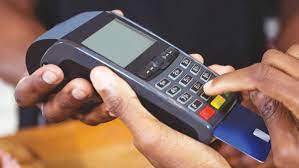
Nigeria’s National Counter Terrorism Centre has raised concerns over the involvement of some point-of-sale operators in facilitating ransom payments to terrorists and organised criminal groups.
The National Coordinator of the NCTC, Adamu Laka, disclosed this on Tuesday during an end-of-year media briefing held in Abuja.
Mr Laka, a major general in the Nigerian Army, spoke against the backdrop of a renewed surge in kidnapping-for-ransom incidents, particularly across northern Nigeria, where armed groups have increasingly targeted schools, places of worship and rural communities.
He noted that in November alone, two separate school abductions were recorded in Kebbi State and Niger State, although all abducted pupils were later released.
Although the Federal Government officially discourages the payment of ransom, families of abducted victims often make payments to secure the release of their loved ones. Authorities have also consistently denied claims that the government itself pays ransom to kidnappers.
According to Mr Laka, investigations into terrorism and kidnapping cases have revealed that ransom payments are increasingly being routed through POS terminals.
“In many cases, ransom payments are transferred by victims directly to POS operators whose account details are provided by terrorists,” he said. “The money is then withdrawn by the criminals.”
He added that security agencies were already taking steps to address the growing problem.
Nigeria’s POS sector has witnessed rapid expansion in recent years, particularly in rural and semi-urban areas with limited access to traditional banking services. Thousands of agents now provide cash withdrawals, transfers and bill payment services on behalf of banks and fintech companies, often operating within informal settings.
While the system has significantly improved access to financial services, Mr Laka said it has also created loopholes that criminal elements are exploiting.
He explained that the Central Bank of Nigeria has issued regulations governing POS and agent banking operations, including customer identification requirements, transaction limits and the mandatory reporting of suspicious transactions to the Nigerian Financial Intelligence Unit.
Under the guidelines, POS agents are required to register properly, verify customer identities and maintain transaction records. Banks and fintech companies are also mandated to monitor unusual cash movements and freeze accounts linked to criminal activities.
However, observers have noted that enforcement of these regulations remains inconsistent, particularly in rural areas where regulatory oversight is weak.
Mr Laka further disclosed that terrorist and criminal groups are constantly evolving their tactics, a development he said necessitates stronger intelligence coordination and enhanced regional cooperation.
He confirmed that Nigerian security agencies are working collaboratively to counter threats emanating from the Sahel region, including infiltration attempts by groups such as Lakurawa and Jama’at Nusrat al-Islam wal-Muslimin into parts of north-west and north-central Nigeria.
He also said terrorists are increasingly exploiting social media platforms to spread propaganda, adding that the NCTC has engaged platforms such as TikTok, Facebook, Instagram, Snapchat and X to facilitate the takedown of extremist content.


