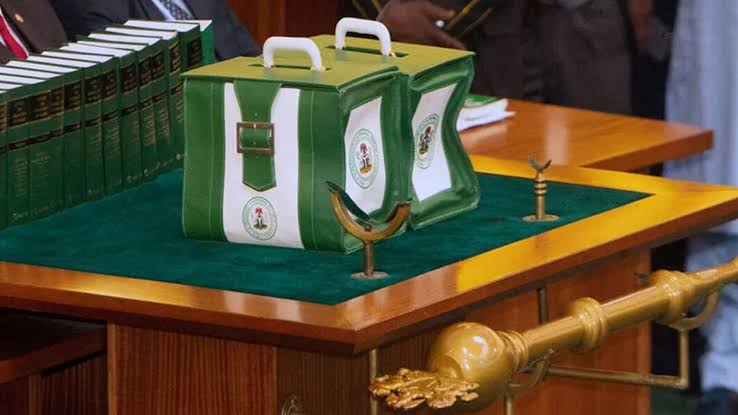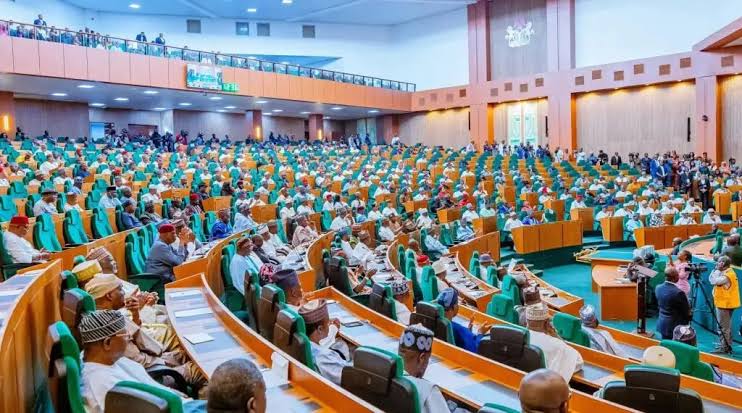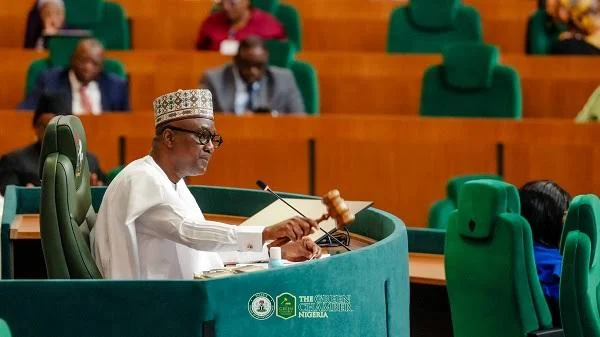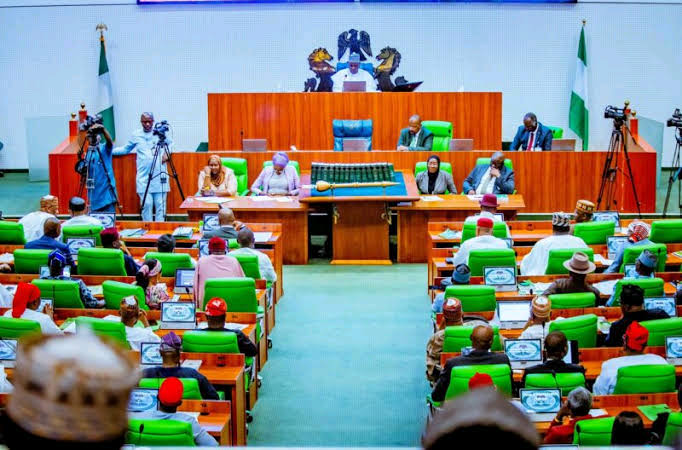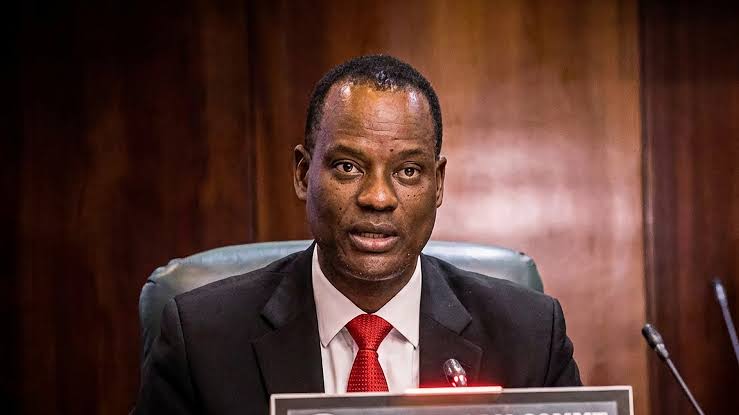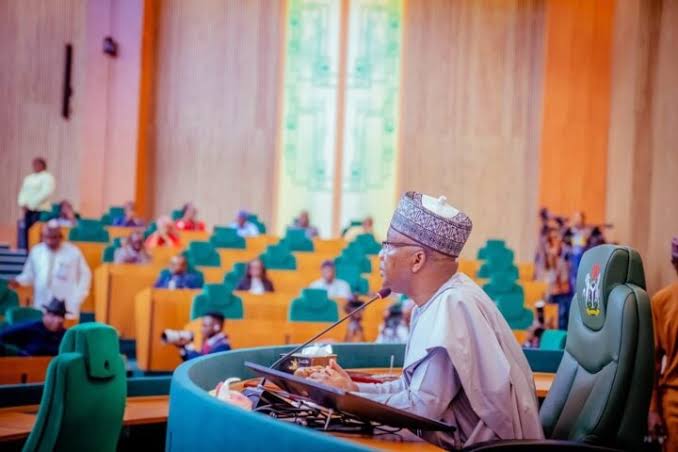


The House of Representatives has summoned the Minister of Finance, Mr. Wale Edun, and the Minister of Budget and National Planning, Mr. Atiku Bagudu, over concerns regarding poor budget implementation.
The summoning took place after a meeting held on Tuesday.
The House held a closed-door session with both Ministers, as well as the Accountant-General of the Federation, Shamseldeen Ogunjimi, and the Executive Chairman of the Federal Inland Revenue Service, Zacch Adedeji.
A lawmaker who attended the session revealed in confidence that the meeting focused intensely on the poor implementation of the capital components of both the 2024 and 2025 budgets. The source stated that lawmakers expressed deep frustration over the government’s consistent failure to release funds for projects that had already been executed by contractors.
Consequently, the House officially resolved not to consider the upcoming 2026 Appropriation Bill until the Federal Government fully clears all outstanding payments owed to contractors under the current 2024 and previous 2025 budget cycles.
In an act of protest against the executive, the House immediately stepped down the consideration of approximately 42 bills that were listed for their first, second, and third readings. Additionally, the presentation of four committee reports on bills proposing the establishment of agricultural colleges and specialized institutions in states like Kaduna, Edo, and others was deferred.
Significantly, the House also suspended, for the third time, its planned consideration of the constitution review report that had been submitted by the Committee on Constitution Review the previous week.
The executive session, which lasted nearly two and a half hours, ended without any official briefing to the press.
However, a member familiar with the discussions stated that the lawmakers were dissatisfied with what they described as President Bola Tinubu’s poor budget performance so far. This member detailed the core issue, stating: “It was the same issue of poor implementation of the 2024 and 2025 budgets. I mean the capital component of the budgets. Projects executed have not been paid for, and this is really embarrassing.”
The source further expressed skepticism regarding assurances given by the executive: “We have been on this for a while now, and despite the assurances we got today, many of us took it with a pinch of salt because the assurances are not new. Members were so angry that they vowed not to consider the 2026 Appropriation Bill when it is transmitted by the president unless the funding gaps in the previous budgets of this administration are addressed.”
The lawmaker added that the Accountant-General pleaded for time to settle the outstanding payments: “The Accountant-General pleaded with lawmakers to be given 48 hours to address the concern of local contractors. As representatives of the people, we granted this request. But I can tell you that some of us are not optimistic,” he said.
In a separate interview, Edo lawmaker Billy Osawaru urged the Federal Government to prioritize payments to contractors, stressing that many had taken substantial loans to execute the projects.
He insisted: “Since the contractors have fulfilled their obligations by executing the 2024 projects, they deserve to be paid, considering the fact that the majority of them secured loans using collateral. The executive must restore its integrity by prioritising these payments.”
Similarly, the Minority Leader of the House, Kingsley Chinda, condemned the poor level of implementation, saying full execution of the budgets was necessary to restore public confidence.
The Rivers lawmaker stated in a telephone interview: “The only solution is for a commencement of full implementation of the budgets.”
The House spokesman, Akin Rotimi, also acknowledged that members were displeased with the government’s indebtedness to local contractors. He did, however, express hope that recent engagements with the executive would lead to improved capital releases. He offered a comprehensive statement on the matter: “As parliamentarians, we are concerned about the poor implementation of the capital component of the 2024 and 2025 budgets. Capital projects are essential to national development because they create jobs, improve infrastructure, and strengthen local economies.”
Rotimi continued by explaining the consequence of the delays: “When releases are delayed or insufficient, progress slows and public confidence drops. We have been engaging with the executive and have received assurances that capital releases will improve.” He concluded by outlining the path forward: “Our priority is to ensure the budget delivers real value to Nigerians, and we will continue strong oversight and collaboration to clear bottlenecks, improve cash-flow planning, and ensure capital projects are executed efficiently and transparently.”
Former Chief Economist at Zenith Bank Plc, Mr. Marcel Okeke, criticized the Federal Government’s budget administration since 2023, describing the concurrent running of multiple budgets as a severe violation of due process. He stated his strong disapproval: “What this (budget distortions) tells us is that the Federal Government is not living up to expectations. The discussion of the budget is another way of discussing the economy. Budget is an annual plan and it is a law meant to be implemented within a specific time frame.”
Okeke continued by pointing out the flawed assumptions involved: “If the Federal Government is distorting this time frame, it means that the government is not serious. Every budget of a given year is done based on assumptions. The assumptions on which the 2024 budget was prepared are different from those of the 2025 budget, and the ones of 2025 will not be the same as those of 2026. They are messing everything up now,” he lamented.
He warned that the lapses at the federal level negatively affect the states: “The state governments usually take cues from the Federal Government’s presentation and assumptions. The state governments don’t control oil. It is the Federal Government that announces the volume of oil production and assumptions for the budget,” he said.
Okeke, while criticizing the previous administration, noted that it at least maintained the January–December budget cycle. He added strong condemnation of the current practice: “The rolling of budgets is a joke on the running of the economy. The Buhari-led government was a failure, but if it did anything well, it was the issue of restoring the January-December budget cycle.”
He concluded by stressing the negative impact on economic agents and the risk of corruption: “As economic agents—households, families, etc—look up to the government framework every year, so that as a person, you will begin to plan.
What this whole thing means is that instead of things being done according to law, they will be done according to somebody’s caprices. The way things are stated in the budget will no longer necessarily be the way they will be implemented. There would be all kinds of corruption, embezzlement, and malfeasance because everything becomes an emergency,” he said.
The House is expected to resume its normal plenary today.