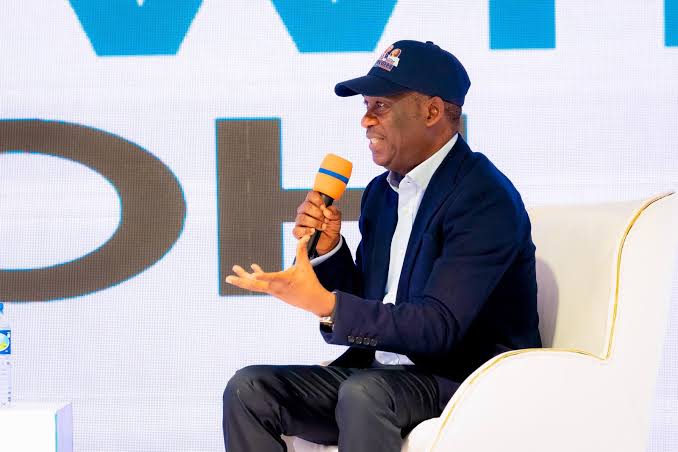
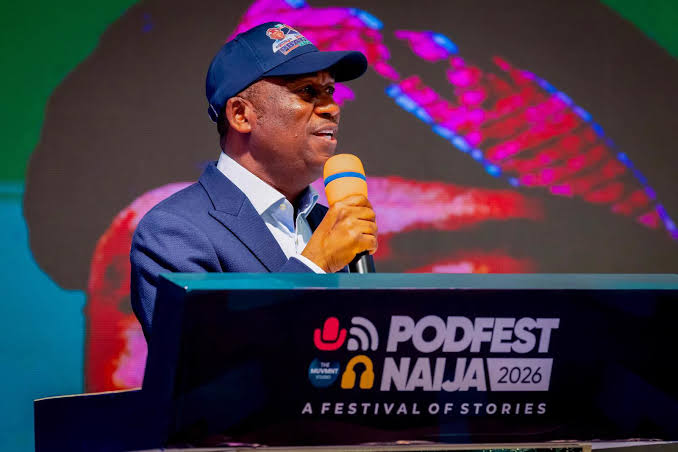
Lagos State Governor Babajide Sanwo-Olu has proposed a record N4.237 trillion budget for 2026, dubbing it the “Budget of Shared Prosperity.”
The proposal, presented to the State House of Assembly, represents a significant increase of over N1 trillion from the 2025 budget.
Sanwo-Olu affirmed that Lagos remains a leading continental economic hub.
“This budget is proposed at a total size of N4.237 trillion. This budget comprises a total revenue of N3.993 trillion, which has only a deficit financing of N243.332 billion. We also have a total revenue comprising totally internally generated revenue of N3.119 trillion and total federal transfers of N874 billion,” the governor stated.
The governor presented a budget proposal outlining N2.185 trillion for capital expenditure and N2.055 trillion for recurrent costs, which includes overheads, personnel, and debt servicing.
Governor Sanwo-Olu provided a detailed breakdown of the proposed recurrent spending, which totals N2.055 trillion, as follows:
Breaking down the recurrent spending, Sanwo-Olu explained:
Overhead costs: N698.891 billion
Subventions: N201.216 billion
Dedicated expenditure: N184.139 billion
Total overhead allocation: N1.084 trillion.
Personnel costs were allocated N440.449 billion.
For debt servicing, N143.876 billion was set for recurring charges and a further N383.404 billion for principal repayment.
These strategic allocations underscore the administration’s continued focus on infrastructure, human capital development, and social welfare.
The budget proposal will now be subject to review and approval by the state legislature.
The announcement comes as Lagos State demonstrates strong financial health. Its Internally Generated Revenue has seen significant growth, rising from N815.86 billion in 2023 to N1.26 trillion in 2024.
Furthermore, the governor reported that as of the third quarter of 2025, the state had achieved an 81 per cent implementation rate of the current year’s budget, having utilized N2.056 trillion against a prorated target of N2.525 trillion.
Capital expenditure was particularly strong, with N1.238 trillion spent, representing 90 per cent of its prorated target.