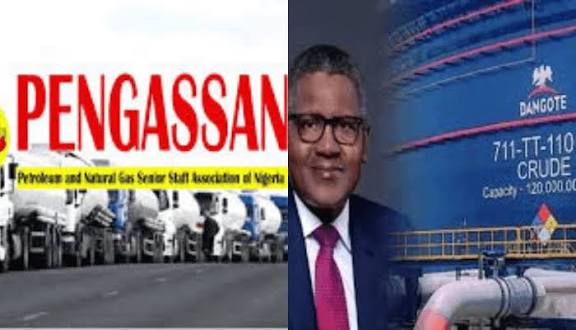

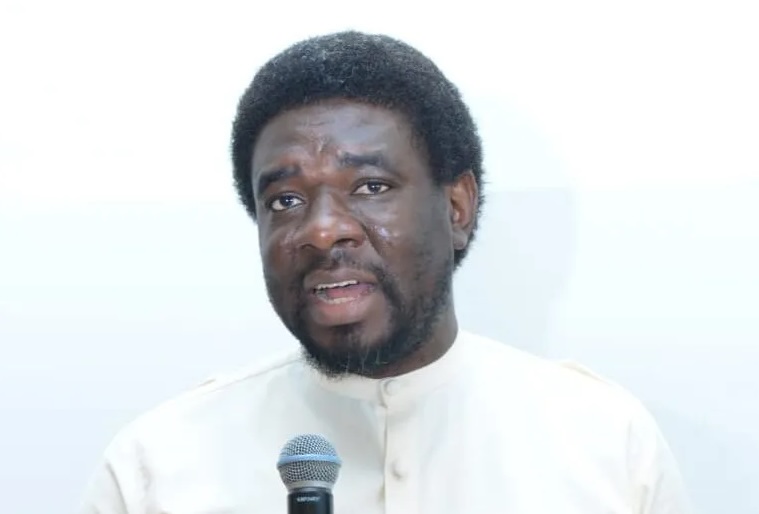
The President of the Petroleum and Natural Gas Senior Staff Association of Nigeria, Festus Osifo, has praised the federal government’s suspension of the proposed 15 per cent import duty on petroleum products, calling it a strategic move that safeguards consumers and encourages domestic production.
In an interview with ARISE NEWS on Thursday, Osifo noted that the decision stemmed from persistent behind-the-scenes advocacy rather than public demonstrations.
“Nigerians always expect us to be on the street shouting. We always say that for every single time we go on the street, there are ten or twenty decisions that we discuss on the table to the favour of the working class and also to the betterment of Nigerians,” he said.
Osifo highlighted the likely effects of the proposed duty, noting that with local production meeting only about 40 per cent of daily consumption, a 15 per cent tax on imports would have driven fuel prices sharply higher.
“Today, the local economy and local production is at best about 40 per cent. That means we are bringing over 60 per cent into the country of our daily consumption. So, if 15 per cent was allowed to stand, that 15 per cent would have been on the imported product… as a result, you are going to have the price moving upward,” he said.
Osifo recognized the Dangote Refinery’s contribution to increasing domestic production but emphasized that local output still covers just 35 to 40 per cent of national fuel demand.
“If we were producing up to 90 per cent of our local consumption, the government could reduce even more than 15 per cent. But because of where we are today, the extra cost would be transferred to Nigerians,” he explained.
Osifo further highlighted the complexities involved in applying import duties within free trade zones.
“I work in a free trade zone. You import products but you don’t pay tax. Once you are taking that product outside that free trade zone, you will pay import duty. Today, the question is: this product is in a free trade zone, so when you move PMS into the Nigerian economy, is it supposed to pay tax? The government finally realised that even in a free trade zone, when you are bringing the product into the country, you are expected to pay import duty,” he noted.
He also criticized the government for overlooking the practical realities of the local energy sector when formulating the policy.
“At this point, we know clearly how it was approved. But according to where we are today, the government is not listening. They are not listening where we are.
“We have listened to NECA, to Yasima, to one of Nigeria’s economies… But they are arguing. The reason we fought their argument was simply because today, energy is not the same thing as sugar. It is not the same thing as cement. Energy is not a need of the day; it is our production locally today. Because it takes time in the life of energy,” he added.
The Nigerian Midstream and Downstream Petroleum Regulatory Authority announced on Thursday that it has abandoned plans to impose a 15 percent duty on imported petroleum products.
This was disclosed in a statement by NMDPRA’s Director of Public Affairs, George Ene-Ita, who also urged the public to avoid panic buying.