

The Presidency is currently making plans to restructure asset ownership within the Nigerian National Petroleum Company Limited due to mounting concerns regarding what it describes as the company’s low oil production output.
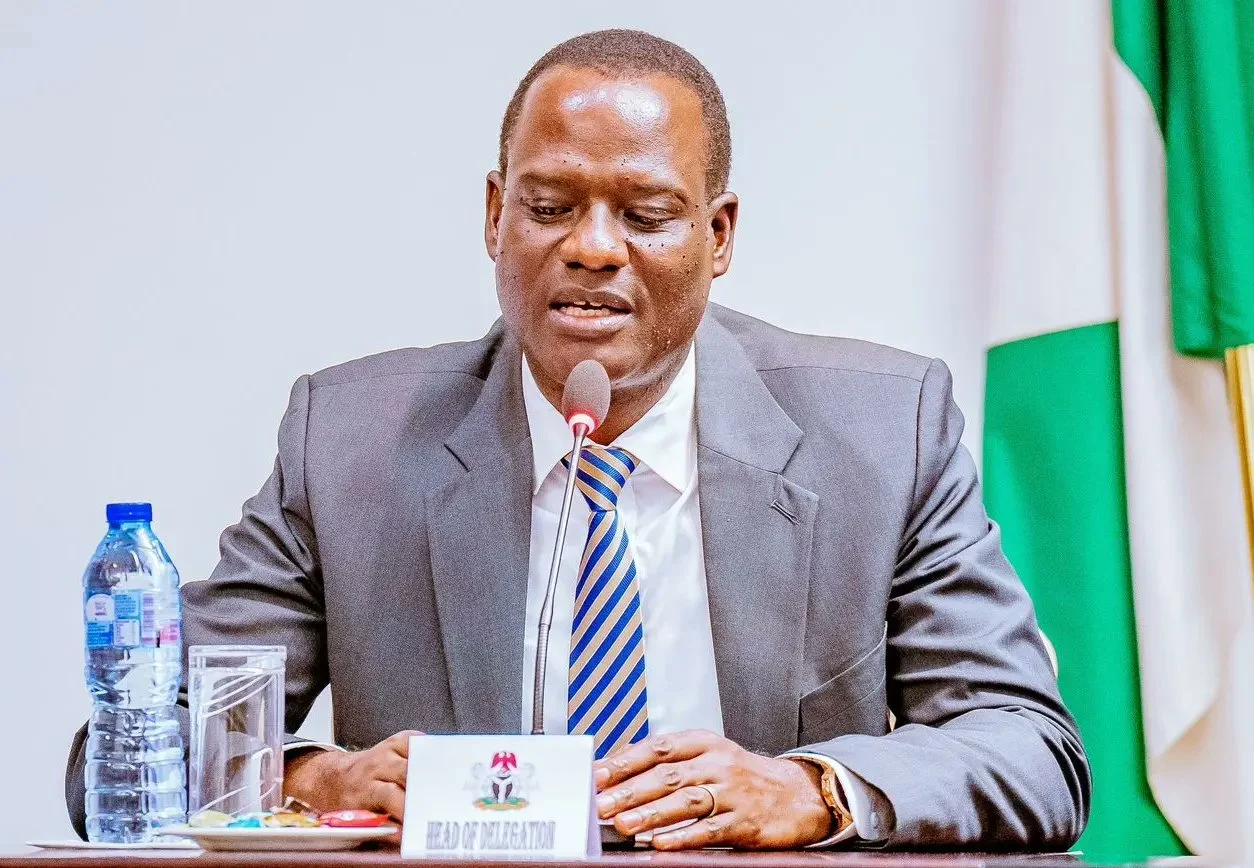
This move was disclosed on Monday by the Special Adviser to the President on Energy, Olu Verheijen, while speaking at the Nigerian Association of Petroleum Explorationists Conference in Lagos. Verheijen presented a comprehensive agenda aimed at revitalising Nigeria’s oil and gas sector while also ensuring both energy security and sustainable development for the nation.
To achieve the ambitious target of 3 million barrels of oil production daily, the Special Adviser emphasised that performance-based stewardship is crucial, and she questioned NNPC’s current capacity to deliver the necessary incremental growth. She pointed out that the NNPC E&P Limited currently produces only 220,000 barrels per day, a figure she noted is less than 10 per cent of the country’s total national oil production.
Verheijen expressed strong doubts regarding NNPC’s ability to fund and execute the extensive drilling campaigns required to significantly raise this output figure.
She highlighted that, unlike the past era of international oil companies operating onshore, current joint venture partners are no longer able to “carry the NNPC,” and she posed the critical question of whether the state-owned firm can generate the needed incremental growth solely from its own balance sheet.
If the answer is no, the Special Adviser asserted that the country “must have the courage to restructure asset ownership and invite those who can deliver credible operators in the technical capacity, the financial depth, and the governance discipline,” stressing that “revitalisation requires performance-based stewardship, not sentiment.”
Verheijen stated, “Independence will also matter more than ever, but independent must not mean inert. Our journey to three million barrels depends on companies like Renaissance, Oando, Seplat, Aiteo, and others moving beyond workovers and infill drilling toward bold, large-scale greenfield developments. Campaigns of the magnitude of Shell’s Forcados or ExxonMobil’s satellite field and NGL projects that truly move the needle, but at the same time, NEPL (NNPC E&P Limited) is now a critical lever for growth, and they only produce 220,000 barrels a day; that is less than 10 per cent of our national production. But can it fund and execute the drilling campaigns needed to juggle that figure? And unlike the IOC era onshore, its JV partners can no longer carry NNPC, so we must ask the hard question: Can an NNPC deliver the incremental growth we need on its own balance sheet? If not, we must have the courage to restructure asset ownership and invite those who can deliver credible operators in the technical capacity, the financial depth, and the governance discipline. Revitalisation requires performance-based stewardship, not sentiment.”
Verheijen further outlined a broader governing framework for Nigeria’s energy sector, which she calls the ‘four R’s’: Reserves, Revenues, Reliability, and Responsibility.
Addressing the issue of reserves, she commented, “Rebuilding the opportunity set. Exploration is not a PowerPoint slide. It is a risky business. But risk has a price, and clarity is the discount. Since 2023, under President Tinubu’s leadership, Nigeria has worked to restore that clarity.”
The Special Adviser underscored the urgent necessity for Nigeria to act swiftly to attract new investments, emphasising that the global stage is dynamic and that other countries will not wait for Nigeria to catch up.
She stated, ”For us in Nigeria, we must do more and move faster to attract exploration and production investment. And our investors have never been so spoiled for choice. The decisions they take will depend on clear, hard-headed assessments of where they can most easily deploy capital and achieve the best returns.”
She added that the current Tinubu administration has made reforms that position Nigeria as a preferred destination for investments a core priority.
Verheijen also highlighted the government’s focus on revenue generation and domestic value creation.
She noted that within just 18 months, the administration has successfully unlocked over $8 billion in Final Investment Decisions through key projects like Ubeta, Bonga North, and HI.
”With a clear line of sight to another $20bn, these aren’t signatures, they’re shovels in the ground. We’re commercialising gas through long-dated GSAs, anchoring LNG apipeline, gas-to-power, industrial uptake, expanding midstream infrastructure that turns stranded molecules into bankable assets,” she explained.
She added that the revenue strategy extends beyond exports: “But our revenue agenda goes beyond exports. It is about domestic value creation, gas-to-power to stabilise our grid, LPG and CNG to replace fossil fuels, petrochemicals and fertilisers to strengthen agriculture and build our industrial base, and a refining that ends import dependence and positions Nigeria as a reliable supplier not just to Nigeria but to West Africa.”
In response, the Chairman of NNPC, Ahmadu Kida, stated that the company’s motto is to collaborate widely and become Nigeria’s company of choice. Kida announced a vision for NNPC to become “Africa’s incontestable energy company” within the next five years, one that Nigerians can truly be proud of.
Kida said, ”At NNPC Limited, we wish in the very near future to be a company that all of you are going to be very proud of, one that all Nigerians should be proud of; and when they see the NNPC Limited logo, they should see a reflection of their shareholding. And again, when NNPC’s name is called, it should sound like a goal that the national football team scored against Brazil in a match. That’s the kind of sentiments we want to provoke in you when they call that NNPC Limited. And we’ll get there. In five years, our vision is to be the African uncontestable energy company.”