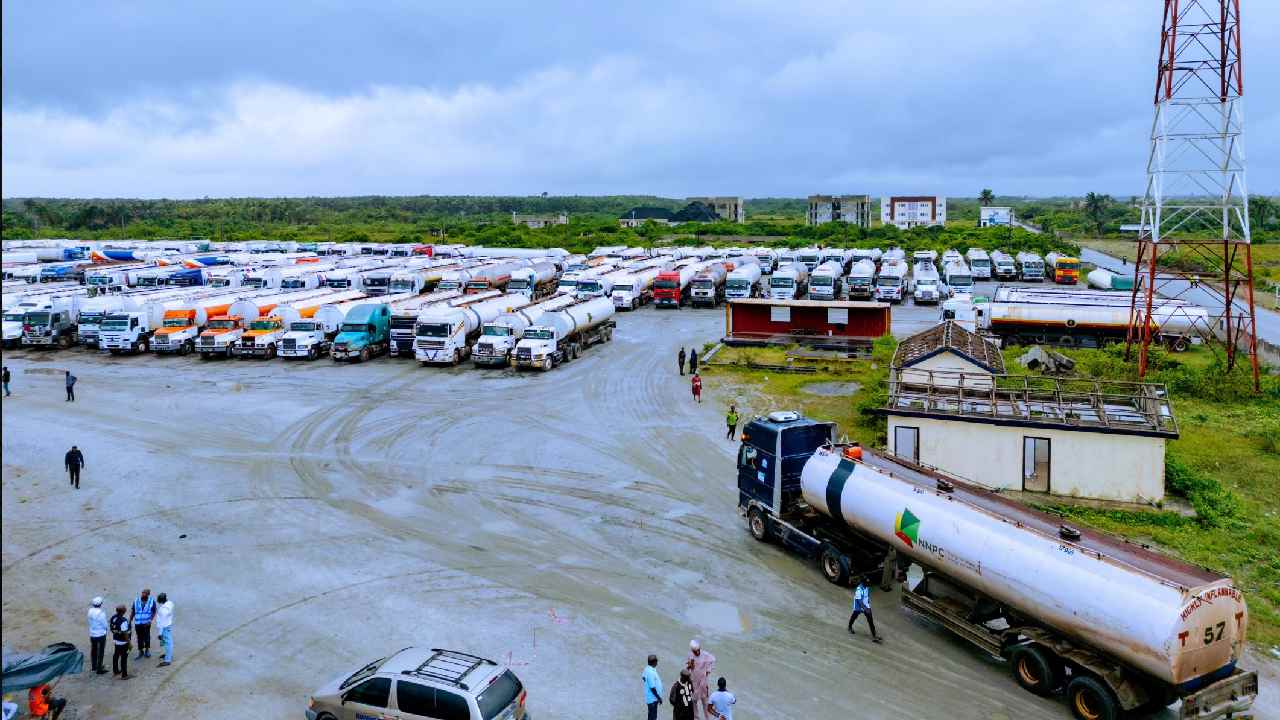


Petroleum marketers have cautioned that the price of Premium Motor Spirit could surpass N1,000 per litre following President Bola Tinubu’s approval of a 15 per cent ad valorem import tariff on fuel.
The policy, set to take effect after a 30-day transition period ending on 21 November 2025, is aimed at supporting local refiners and curbing the influx of cheaper imported fuel, which threatens domestic refining investments.
However, marketers warn that the measure could have unintended consequences, potentially making petrol unaffordable for many Nigerians.
in an interview on Thursday, several depot operators familiar with the matter, who requested anonymity, said the new tariff could further drive up prices from the current average of around N920 per litre in many regions, according to The Punch.
“As it is, the price of fuel may go above N1,000 per litre. I don’t know why the government will be adding more to people’s suffering,” one of the depot operators said.
Another depot operator added, “Unfortunately, some of the importers are working in alignment with Dangote, which is why the last price increase was general; all players raised their prices at once. Let’s just wait and see what happens next.”
Another operator noted that without a clear framework to stabilize market forces and promote fair competition, the new import duty could spark further price hikes, intensifying the burden on consumers.
The National Vice-President of the Independent Petroleum Marketers Association of Nigeria, Hammed Fashola, acknowledged that the tariff could have significant implications, potentially triggering a surge in petrol prices.
He noted that while the policy has both positive and negative effects, discouraging imports and promoting local refining—it could also be viewed by some marketers as an opportunity to monopolize the sector in favor of Dangote and a few other major refineries.
“The 15 per cent tariff on imported fuel has its own implications. Maybe the price will go up, and equally, it will discourage importers from bringing in fuel if it becomes too costly.
“But it has both negative and positive effects on the sector. I see that the government is trying to protect local refiners, but it will have its own implications because people will see it as a way of monopolising the industry for certain people. At the same time, the government aims to protect the local refiners,” he said.
However, Fashola emphasized that if local refiners fail to supply sufficient fuel to the domestic market, it could spark a fuel crisis.
“If the local refiners fail, it will have its own implications. It may lead to scarcity, and people will not have an alternative. So, it has both positive and negative effects. That’s the way I see it,” he added.
On whether the move complies with the Petroleum Industry Act, Fashola said the government would act within the law, noting that the aim is to support local refineries, which is beneficial for the economy.
He also called on local refiners, especially the Nigerian National Petroleum Company Limited, to meet expectations by revamping the Port Harcourt, Warri, and Kaduna refineries.
“My advice or my prayer is to the new management of NNPC: the way they are going, I think they are going in the right direction, and they have to do it fast by bringing in investors to revive our refineries. If all NNPC refineries can come on board, it will solve a lot of problems. I hear people trying to say that maybe they’re going to practise monopoly, but that will not be there. This applies to other private refineries like BUA; when they are able to come up, I think that the fear of monopoly will not be there anymore. There will be competition among the refineries, and that will be good for us,” Fashola stated.
Meanwhile, the National President of the Petroleum Products Retail Outlet Owners Association of Nigeria, Billy Gillis-Harry, described the 15% tariff as a win-win measure, noting that while the policy is not entirely new, its effectiveness will be tested.
“Our expectation is that at some point, it might be reviewed. We are looking for product availability and affordability. We must always keep an eagle eye on these two things. That’s what PETROAN will advise at this time. I want Nigerians to know that if we are looking for cheap fuel and we are driving everybody out of the business, the product will not be available, and then prices will skyrocket.
“As it is today, everybody is working with Dangote, and we know that Dangote cannot satisfy the country. So, there has to be a mix of product availability,” he added.