





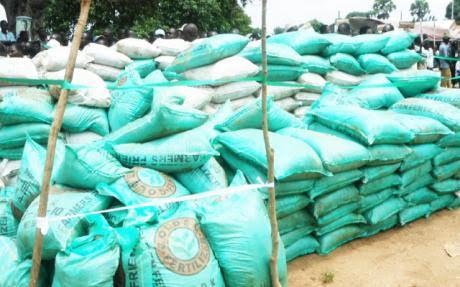
The Ministry of Finance Incorporated has revealed that Nigeria imported over 560,000 metric tonnes of fertilizer raw materials in 2025 alone, underscoring the Federal Government’s determination to guarantee steady access to agricultural inputs under the Presidential Fertiliser Initiative.
According to MOFI, at least 10 vessels have already discharged or are expected to discharge fertilizer raw material cargoes at Nigerian ports this year.
The agency emphasized that the continued inflow of inputs is building a strong foundation for robust local production while assuring uninterrupted supply and stability across Nigeria’s fertilizer value chain.
“New data confirms steady progress. From 2022 to date in 2025, 48 distinct vessels have delivered critical raw materials for fertilizer blending under the PFI. In 2025 alone, 10 vessels have already been discharged and are expected to discharge cargoes, accounting for more than 560,000 metric tonnes of inputs received at Nigerian ports,” the statement read.
MOFI noted that the initiative is directly aligned with President Bola Tinubu’s vision for food sovereignty, which prioritizes not just production volumes but also resilience in the supply chain.
The agency added that ensuring that blending plants have consistent access to raw materials has boosted confidence among farmers and industry stakeholders.
The PFI has now entered a new phase tagged PFI 3.0, with a focus on laying a solid foundation for the continuous supply of raw materials to blending plants across the country.
“As of September 2025, more raw materials have already been supplied or ordered than the total supplied in 2024, and additional arrangements have been concluded with fertilizer raw material manufacturers to stock warehouses nationwide,” MOFI said.
MOFI’s Managing Director and Chief Executive Officer, Dr. Armstrong Takang, described the PFI as a model of effective public-private collaboration capable of addressing complex national challenges.
“We are meticulously building a system that can insulate farmers from global market shocks and instill the confidence needed for long-term agricultural planning,” he said.
The Fertiliser Producers and Suppliers Association of Nigeria also highlighted the remarkable growth in local blending capacity under the initiative.
According to its President, Sadiq Kassim, the number of operational blending plants has expanded to more than 90 nationwide, with a combined blending capacity of up to 13 million metric tonnes.
“This capacity is a critical asset in ensuring fertilizer is consistently available for our farmers, bringing it closer to their farms and reducing transportation costs,” Kassim said.


