
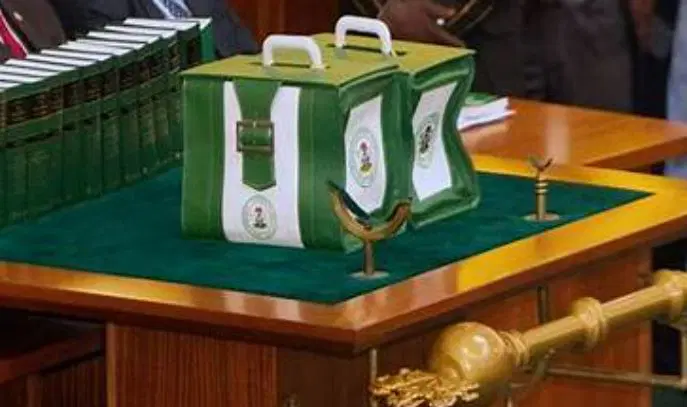
An examination of the consolidated ZIP/ZIF master project sheet for the 2026 budget cycle reveals that the Federal Government has set aside N198.53 billion for 9,230 intervention projects across the country.
These projects cover social welfare, infrastructure rehabilitation, agriculture, health, education, and community development.
The dataset combines projects under intervention and recovery programmes.
The allocation is spread across thousands of small-scale projects, most valued between N5 million and N27 million, together making up the entire N198.53 billion.
A breakdown by sector shows a large share going to social intervention programmes.
Large-scale Ramadan feeding initiatives alone account for over N12.4 billion across various local government areas.
Community-based development projects, including small infrastructure and social amenities in specific federal constituencies, are also prominent.
Some constituencies receive combined allocations exceeding N2 billion.
Health-related emergency interventions received N602.71 million for 20 projects, mainly addressing disease outbreaks like cholera.
Education and research infrastructure projects, including laboratory rehabilitation, student hostels, dining halls, research fellows’ residences, and staff quarters renovation, got N3.71 billion across 154 projects in public institutions.
Intervention spending leans heavily toward social and economic programmes beyond health and education.
Women and youth empowerment initiatives received N43.54 billion for 1,943 projects.
Skills acquisition and vocational training schemes were allocated N27.83 billion for 1,191 projects, showing strong focus on employment, livelihoods, and capacity building.
In agriculture, animal husbandry and related farming projects got N15.34 billion across 808 projects, including livestock support and rehabilitation of animal enclosures.
Infrastructure spending leads the dataset.
Rehabilitation and construction of public facilities, such as training centres and community halls, received the largest single allocation of N48.45 billion across 2,481 projects.
Renewable energy interventions, especially solar-powered streetlights, feature strongly with 2,047 projects worth N34.0 billion collectively.
Overall, the N198.53 billion for 9,230 intervention projects in the 2026 budget is distributed across numerous small-value initiatives.
Social empowerment, infrastructure rehabilitation, and energy access stand out as the main priorities.
Experts, however, have expressed serious concerns about the scale, structure, and accountability of these allocations.
Tunde Ajayi, a public finance analyst, said the sheer scale and fragmentation of the projects raise red flags.
“Allocating nearly N200 billion across more than 9,000 micro-projects makes effective oversight extremely difficult,” Ajayi said.
“While constituency projects are meant to address local needs, this level of fragmentation often weakens accountability and creates opportunities for duplication, abandoned projects, and inflated costs.”
He noted that many of the projects fall within expenditure bands that historically suffer the highest implementation failures.
“Projects in the N5 million to N30 million range are the hardest to track because they are numerous and scattered. Without a transparent performance framework, it is difficult to assess real impact,” he said.
Ajayi added that projects parked under service-wide or non-MDA-specific capital items fall into an accountability grey zone.
“Citizens cannot easily identify who is responsible when projects fail or are abandoned,” he said, warning that women and youth empowerment programmes, despite receiving large allocations, are especially vulnerable to abuse.
“Empowerment projects are among the most abused because outputs are difficult to verify. Distribution of items or short trainings rarely translates into sustainable economic outcomes.”
Similarly, Charles Sani, an economist, said the scale and structure of constituency-linked intervention spending in the 2026 budget reinforce long-standing concerns that such projects have become a form of sub-optimal public expenditure and a political bargaining tool between the executive and the legislature.
“Constituency projects may be well intentioned,” Sani said, “but the way they are currently implemented raises serious questions about effectiveness, transparency, and value for money.”
He noted that the dispersal of N198.53 billion across 9,230 mostly small-ticket projects mirrors a pattern that prioritises political accommodation over development planning, adding that the figures could rise further as the National Assembly concludes the budget defence process.
“I am sure the amount will increase after it passes through the National Assembly. I wouldn’t even be shocked if the final figure is higher than this,” he said.
“Yet, many of the projects captured in the 2025 budget have still not been implemented.”
Sani stressed that the ZIP/ZIF structure weakens accountability.
“It is the job of the legislature to appropriate and the executive to execute. Once federal resources are pushed directly into localised projects tied to individual constituencies, without routing them through accountable structures like local governments or a dedicated grassroots development agency, you create an oversight vacuum,” he said.
“When projects are scattered, repeatedly renamed, and annually recycled, measurement becomes impossible. Anything you cannot measure or properly track becomes economic wastage.”
He pointed to repeated project entries in successive budgets as evidence of inefficiency.
“You see the same road, the same training centre, the same empowerment scheme appearing year after year. Funds are released, but the communities barely feel the impact,” he said.
According to him, empowerment projects that dominate the 2026 intervention allocations are particularly prone to abuse.
“Instead of structured investments that create jobs and grow local economies, you see token interventions; sewing machines, tricycles, wheelbarrows with no sustainability plan. That does not solve unemployment or drive growth,” Sani said.
He maintained that constituency projects could still play a developmental role if redesigned.
“If properly structured, these funds could support cottage industries, agro-processing hubs, or local value chains that contribute to GDP and employment,” he said.
“But that would require political will, transparency, and a willingness to dismantle patronage.”
Faith Nwadishi, Executive Director of the Centre for Transparency Advocacy, also warned that the growing volume of intervention projects in the 2026 budget raises concerns about misuse.
“When you see thousands of small projects packed into the budget, the question is whether the goal is development or election financing,” she said.
Nwadishi said reports by oversight bodies such as the Independent Corrupt Practices and Other Related Offences Commission (ICPC) and the Fiscal Responsibility Commission (FRC) consistently show poor execution, abandoned projects, and diversion of funds.
“Monitoring efforts often reveal that projects are either not executed, not completed, or not fit for purpose,” she said.
She called for clearer institutional responsibility and stronger scrutiny, including from the National Assembly Budget and Research Office (NABRO).
“If constituency projects remain part of the budget, there must be full disclosure, needs assessments, geo-tagging, and utilisation reports,” Nwadishi said. “Otherwise, they will continue to weaken capital spending and undermine public trust.”
She concluded that without reform, the 2026 intervention allocations risk repeating the failures of previous budget cycles.
“You cannot fix structural underdevelopment with fragmented, politically negotiated projects,” she said. “What Nigeria needs is planning, accountability, and citizens who understand what governance is supposed to deliver not tokenism.”