



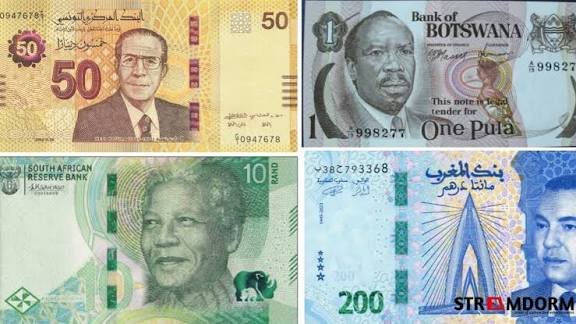
The strongest currencies in Africa in 2026 are more than just numbers on a chart; they reflect stable economies, sound monetary policies, and growing investor confidence.
Several African countries have maintained strong currencies against the U.S. dollar, reflecting various degrees of fiscal discipline, monetary policy effectiveness, and economic structure.
Currency strength remains a vital indicator of a country’s economic stability and overall financial health.
According to BusinessInsider, including financial analyses and currency rankings as of January 2026 (aligned with Forbes currency data and market updates), the following are the ten strongest African currencies against the US Dollar.
1. Tunisia – Tunisian Dinar (TND)
Exchange Rate: 2.86 TND per USD
Tunisia continues to lead as the African country with the strongest currency. The Tunisian Dinar’s strength is largely supported by strict exchange control measures and inflation management, even amid ongoing political and economic challenges.
2. Libya – Libyan Dinar (LYD)
Exchange Rate: 6.31 LYD per USD
Despite years of political unrest, the Libyan Dinar remains notably strong. This resilience is primarily due to Libya’s abundant oil reserves, which generate substantial foreign exchange revenue.
3. Morocco – Moroccan Dirham (MAD)
Exchange Rate: 9.01 MAD per USD
The Moroccan Dirham benefits from the country’s stable macroeconomic policies, economic diversification, and prudent monetary governance. Morocco’s growing appeal to foreign investors, especially in the renewable energy sector, also bolsters its currency.
4. Ghana – Ghanaian Cedi (GHS)
Exchange Rate: 10.84 GHS per USD
While the Ghanaian Cedi has experienced volatility, recent economic reforms and support from the IMF have introduced a measure of stability. Government initiatives to rein in inflation and manage public debt are beginning to yield positive outcomes.
5. Botswana – Botswana Pula (BWP)
Exchange Rate: 13.05 BWP per USD
The Botswana Pula stands out as one of the strongest currencies in Sub-Saharan Africa. Sound governance, effective fiscal policies, and a balanced reliance on diamond exports have helped maintain its strength.
6. Seychelles – Seychellois Rupee (SCR)
Exchange Rate: Approximately 13.5 SCR per USD
The Seychellois Rupee draws strength from the nation’s tourism-driven economy, prudent fiscal management, and efforts to diversify beyond traditional sectors. As a small island nation, Seychelles benefits from foreign exchange inflows and controlled monetary policies that support currency stability.
7. Eritrea – Eritrean Nakfa (ERN)
Exchange Rate: Approximately 15 ERN per USD
The Eritrean Nakfa maintains its position through a fixed exchange rate regime and government controls on currency flows. Despite limited international trade and economic isolation, these measures help preserve nominal value against the dollar.
8. Eswatini – Swazi Lilangeni (SZL)
Exchange Rate: Approximately 16-17 SZL per USD (closely pegged to South African Rand)
The Lilangeni is pegged to the South African Rand under the Common Monetary Area agreement, inheriting stability from regional economic ties, mining exports, and shared monetary policies with neighboring countries.
9. South Africa – South African Rand (ZAR)
Exchange Rate: Approximately 16.1-16.2 ZAR per USD
Africa’s most traded and liquid currency, the Rand benefits from a sophisticated financial sector, commodity exports (gold, platinum), and active monetary policy by the South African Reserve Bank. It serves as a regional anchor despite occasional volatility from global factors.
10. Namibia – Namibian Dollar (NAD)
Exchange Rate: Approximately 16.6 NAD per USD (1:1 peg to South African Rand)
The Namibian Dollar is directly pegged to the South African Rand, ensuring parity and stability. Supported by mining (uranium, diamonds) and sound fiscal oversight, it reflects Namibia’s integration into the regional monetary framework.
Nigeria’s Position and Currency Details
Nigeria’s Naira (NGN) does not feature in the top 10 strongest African currencies. As of January/early February 2026, the exchange rate hovers around 1,385–1,400 NGN per USD (official NFEM rates around 1,386–1,396, with parallel market rates slightly higher in the 1,460–1,480 range). This places the Naira well outside the top rankings—typically in the mid-to-lower tiers among African currencies in terms of nominal strength against the USD.
Despite being Africa’s largest economy by nominal GDP, the Naira has faced persistent challenges from foreign exchange shortages, inflation pressures, and reliance on oil revenues. Recent Central Bank of Nigeria reforms, including improved liquidity management and inflows, have supported some stabilization and modest appreciation in early 2026. However, it remains significantly weaker in nominal terms compared to the top performers, which benefit from stricter controls, resource-backed stability, or regional pegs. Broader efforts to boost non-oil exports and reserves could aid long-term strengthening.
These rankings highlight how resource wealth, policy discipline, and regional linkages contribute to currency resilience across the continent. While nominal exchange rates provide a snapshot, broader economic contexts—including inflation, reserves, and trade balances—offer deeper insights into long-term strength.